The Analyst's Guide to AI News Today 2026
AI news today is centered on safety-tested frontier models, healthcare deployment, agentic tools, and open-weight competition across the United States, China, and enterprise software markets. On July....

The Analyst's Guide to AI News Today 2026
AI news today is centered on safety-tested frontier models, healthcare deployment, agentic tools, and open-weight competition across the United States, China, and enterprise software markets. On July 20, 2026, U.S. public health agencies were reported to be testing OpenAI and Anthropic models, while OpenAI highlighted long-horizon model safety, GPT-Red, and GPT-5.6 adoption in Microsoft 365 Copilot. Healthcare AI also accelerated, with Bunkerhill raising $55 million for Carebricks and Neko Health securing $700 million to expand AI body scans in the United States. For analysts, publishers, and data-driven brands such as Football Insights, the lesson is clear: treat AI headlines as operational signals, not entertainment. Prioritize verified sources, model governance, healthcare regulation, and product adoption evidence before turning any AI news today into forecasts, betting content, or strategic decisions.
Photo by Pavel Danilyuk on Pexels
If you track AI to improve sports analytics, content workflows, or prediction models, start with the latest signals before acting on the noise.
Step 1: What changed in AI news today?
AI news today changed because model safety, public health testing, and enterprise adoption moved from theory into deployment. OpenAI, Anthropic, Google DeepMind, Microsoft 365 Copilot, Bunkerhill, and Neko Health are no longer isolated stories; together, they show AI entering regulated, high-stakes systems.
The clearest shift is that AI headlines are becoming infrastructure headlines. U.S. public health agencies testing OpenAI and Anthropic models signals a move toward practical evaluation in epidemiology, outbreak response, and health administration. That matters because government testing usually asks harder questions than consumer product reviews: reliability, bias, privacy, auditability, and failure behavior under pressure. According to the U.S. Food and Drug Administration, AI and machine learning in medical software require careful lifecycle oversight, especially when systems influence clinical or operational decisions.
For Football Insights, the same pattern applies to 2026 World Cup coverage and gambling-adjacent analysis. A model that summarizes Argentina’s pressing structure or predicts France’s expected goals cannot be trusted simply because it sounds fluent. It needs source tracking, version control, and clear separation between statistical probability and editorial judgment. To go deeper into model-assisted match forecasting, see our [Internal Link: AI-powered World Cup prediction methods].
Step 2: How should readers rank the biggest AI stories?
Rank AI stories by consequence, evidence, and deployment stage, not by hype. A funding round, such as Bunkerhill’s $55 million or Neko Health’s $700 million, matters more when tied to real clinical workflows, regulatory exposure, or measurable adoption in the United States.
Think of AI news as a stadium floodlight system: some beams illuminate the pitch, while others only dazzle the crowd. OpenAI’s safety and alignment updates matter because long-horizon models can plan across many steps, which increases both productivity and risk. Anthropic matters because its models are frequently compared with OpenAI in safety-sensitive enterprise settings. Google DeepMind matters because its bioresilience work sits near biotechnology, DNA synthesis screening, and outbreak response, areas where errors can become public safety issues. The World Health Organization has warned that health AI should be built around transparency, accountability, and human oversight.
A useful ranking method is simple:
- Put regulated use cases first: health, finance, public services, and safety.
- Place enterprise adoption second: Microsoft 365 Copilot, ChatGPT for work, and agentic platforms.
- Track model architecture third: open-weight systems such as Kimi K3 and frontier releases like GPT-5.6.
- Treat viral demos last unless they include benchmarks, partners, or deployment data.

Photo by Artem Podrez on Pexels
For daily readers who want AI signals translated into sports analytics and tournament strategy, this is where disciplined interpretation starts.
Step 3: How can AI news today affect sports analytics?
AI news today affects sports analytics by changing the tools used to collect, interpret, and publish match intelligence. When OpenAI improves long-horizon reasoning or Microsoft 365 Copilot adopts GPT-5.6, analysts gain faster workflows, but they also inherit model-risk responsibilities.
The practical impact is visible in three places. First, scouting workflows become more automated: analysts can summarize video notes, injury reports, and tactical patterns faster than manual review alone. Second, prediction models can combine structured data, such as shots, possession chains, and player tracking, with unstructured reports from press conferences and training updates. Third, editorial teams can produce richer previews for events like the 2026 FIFA World Cup, where Football Insights covers tactics, player stats, match predictions, and tournament trends for fans who need daily clarity.
The contrarian point is this: better AI does not automatically mean better betting insight. In gambling-related content, the risk is overconfidence. A language model may explain why Brazil should dominate a group-stage opponent, but unless the conclusion is checked against odds movement, player availability, venue conditions, and sample-size limits, the article may sound precise while being weak. For more on responsible analytical workflows, visit our [Internal Link: responsible betting and match prediction guide].
Step 4: What should professionals watch next?
Professionals should watch model governance, open-weight competition, agentic healthcare platforms, and enterprise integration. OpenAI, Anthropic, Google DeepMind, Kimi K3, Bunkerhill Carebricks, Neko Health, and Microsoft 365 Copilot each represent a different pressure point in the 2026 AI market.
Open-weight models such as Kimi K3 deserve special attention because they may reduce dependence on expensive proprietary compute. The notable strategic angle is memory efficiency: if a model can perform competitively while requiring less compute, regional AI ecosystems in China, Europe, and emerging markets may gain more room to innovate. Meanwhile, agentic healthcare platforms like Carebricks point toward AI systems that do not merely answer questions but coordinate workflows across hospital departments, patient records, and administrative tasks. That shift raises the bar for logging, permissions, and human override mechanisms.
One underreported operational tip: when evaluating AI tools for publishing or sports analytics, ask whether the vendor provides model-version history at the output level. If a match prediction generated on July 9, 2026 used GPT-5.6 but a later update used a different model, your archive should show that difference. Without version records, post-match performance reviews become guesswork rather than analysis.

Photo by Jakub Zerdzicki on Pexels
If you want a sharper bridge between AI developments and football decision-making, follow the data trail rather than the headline alone.
Step 5: verification
Verification is the difference between using AI news today as intelligence and spreading noise. Before citing OpenAI, Anthropic, Google DeepMind, Microsoft, Bunkerhill, Neko Health, or Kimi K3, confirm the original source, publication date, product name, and whether the claim is tested, announced, funded, or merely rumored.
A reliable verification workflow should feel like walking through a quiet control room before kickoff. Every screen must show the same match clock. Start with primary sources such as OpenAI News, official government pages, company blogs, regulatory filings, and reputable technology media. Then classify each claim by evidence level. A model launch is not the same as broad user adoption. A safety paper is not the same as independent certification. A healthcare funding round is not the same as clinical performance.
Use this checklist before publishing or acting:
- Confirm the date, especially for fast-moving AI news today.
- Identify whether the source is primary, secondary, or social media.
- Separate safety claims from performance claims.
- Check whether a model is available publicly, privately, or only in preview.
- Record model names exactly, including GPT-5.6, GPT-Red, Claude, Gemini, Kimi K3, and Carebricks.
For editorial teams, this process protects trust. For Football Insights, it also protects readers who may use analysis around the 2026 World Cup to understand odds, tactics, and player trends. To build a repeatable newsroom process, see our [Internal Link: sports data verification checklist].
Troubleshooting common failures
The most common failure in reading AI news today is confusing announcement velocity with real-world maturity. A company can publish five updates in one week, but that does not mean every product is stable, regulated, affordable, or suitable for public-facing analysis.
Another frequent mistake is treating all AI sectors as interchangeable. Healthcare AI, public health AI, enterprise productivity AI, and sports prediction AI have different risk profiles. Google DeepMind’s bioresilience work touches biosecurity and outbreak readiness, while Microsoft 365 Copilot focuses on workplace productivity. Neko Health’s body-scan expansion raises questions about preventive care, imaging workflows, and patient data. Kimi K3 raises questions about open-weight access, memory use, and geopolitical competition. The OECD AI Principles state that AI systems should be robust, safe, secure, and accountable, a useful baseline for comparing these sectors.
A final failure is ignoring the human layer. Coaches, doctors, public health officials, editors, and bettors all interpret AI outputs differently. The strongest teams build review loops: humans set the question, AI accelerates the search, and humans make the accountable decision. That is the model Football Insights uses when connecting AI tools with 2026 World Cup match coverage.
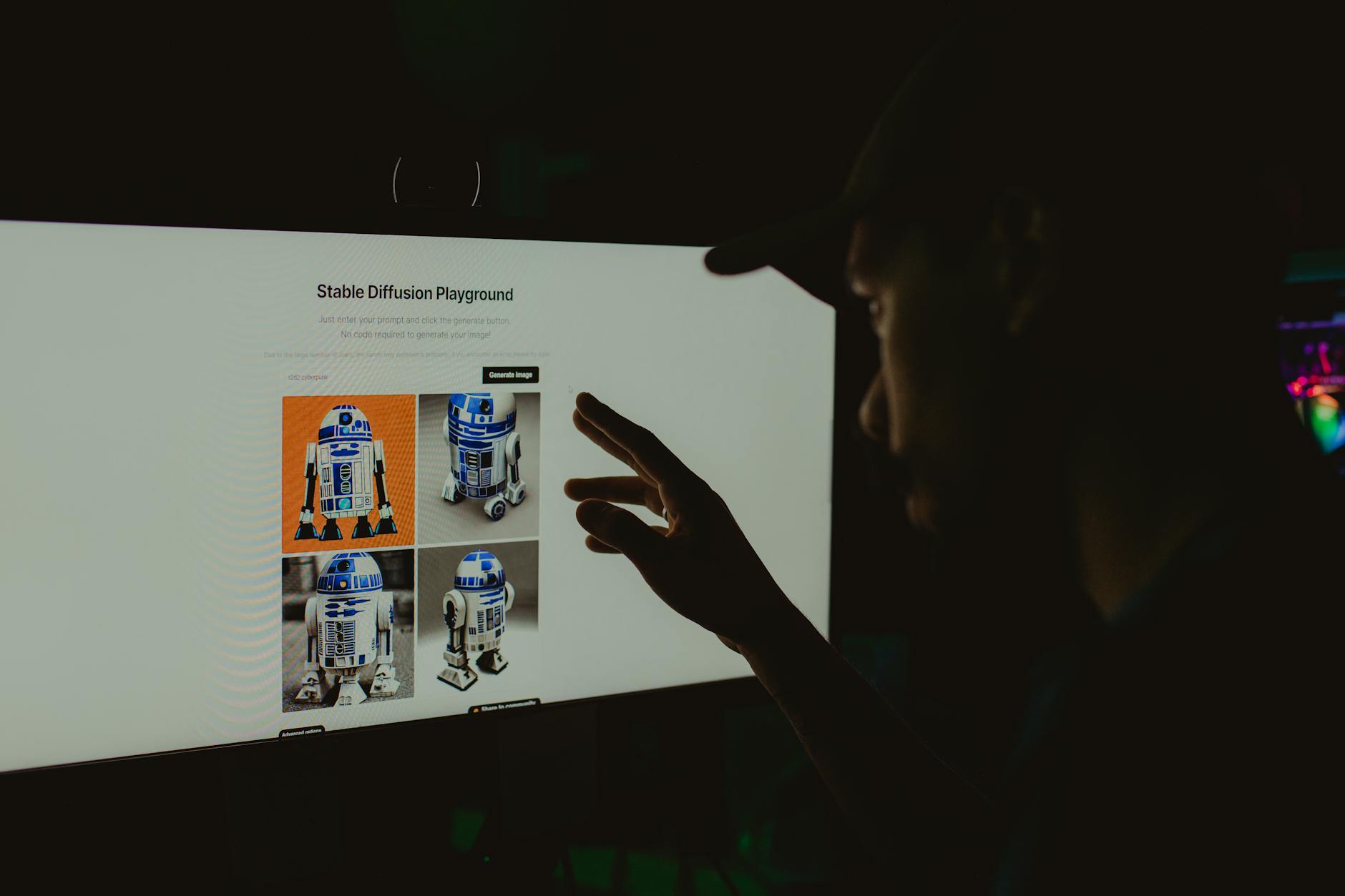
Photo by Alberlan Barros on Pexels
The smartest next step is to combine verified AI news with disciplined sports insight before making a prediction or publishing a conclusion.
Frequently Asked Questions
Q: What is AI news today?
A: AI news today means the latest verified developments in artificial intelligence products, safety research, funding, regulation, and adoption. In 2026, major stories include OpenAI safety work, Anthropic model testing, Google DeepMind bioresilience, Microsoft 365 Copilot upgrades, and healthcare AI expansion. The best way to read it is by separating announcements from deployed, measurable systems.
Q: How do I verify AI news before using it?
A: Verify AI news by checking the original source, date, model name, and evidence type. Start with company announcements, government agencies, peer-reviewed research, or reputable media, then compare at least two independent references. For sports or gambling-related analysis, keep a record of which model and data source supported each prediction.
Q: What is the difference between OpenAI and Anthropic in today’s AI news?
A: OpenAI and Anthropic are both frontier AI companies, but they are often discussed through different product and safety lenses. OpenAI is closely tied to ChatGPT, GPT-5.6, Microsoft 365 Copilot, and enterprise deployment, while Anthropic is widely associated with Claude and safety-focused model design. Both matter when public agencies or regulated industries test AI systems.
Q: Is AI news today useful for World Cup predictions?
A: AI news today is useful for World Cup predictions when it helps analysts understand better tools, not when it replaces football judgment. Football Insights can use AI to process team tactics, player stats, injury updates, and tournament schedules for the 2026 FIFA World Cup. However, predictions should still be reviewed against odds, match context, and human tactical expertise.
Q: Why do AI healthcare stories matter so much in 2026?
A: AI healthcare stories matter because they show whether artificial intelligence can operate safely in high-risk environments. Bunkerhill’s $55 million Carebricks funding and Neko Health’s $700 million expansion are examples of AI moving into hospital workflows and preventive scanning. These areas require stronger privacy, accuracy, audit trails, and regulatory oversight than ordinary consumer AI apps.
Q: What should I do if AI news sources disagree?
A: If AI news sources disagree, prioritize primary documents and classify each claim by certainty. A company blog may confirm a launch, while a media article may add context, and a social post may only repeat speculation. When uncertainty remains, publish the claim with clear wording such as “reported,” “announced,” or “under testing,” rather than presenting it as settled fact.
Football Insights � Editorial Archive � Volume IV