The Fan’s Guide to Algeria Football
Algeria’s national football team is one of Africa’s most dangerous tournament sides, combining Riyad Mahrez’s elite creativity with a deep North African talent pool and a tactical identity built aroun...

The Fan’s Guide to Algeria Football
Algeria’s national football team is one of Africa’s most dangerous tournament sides, combining Riyad Mahrez’s elite creativity with a deep North African talent pool and a tactical identity built around controlled possession, aggressive wide play, and rapid transitions. Representing Algeria in CAF competition, the Desert Foxes won the Africa Cup of Nations in 1990 and 2019, while their strongest World Cup performance came in 2014, when they reached the round of 16 in Brazil. The current generation is shaped by experienced players such as Aïssa Mandi, Ramy Bensebaini, Ramiz Zerrouki, and Mahrez, alongside younger options including Ibrahim Maza and Rayan Aït-Nouri. ESPN’s listed 2026 squad data includes 23 players, with Mahrez recording 2 goals and 1 assist across 4 appearances in the displayed sample. The actionable verdict is simple: assess Algeria through squad balance and transition efficiency, not star power alone.
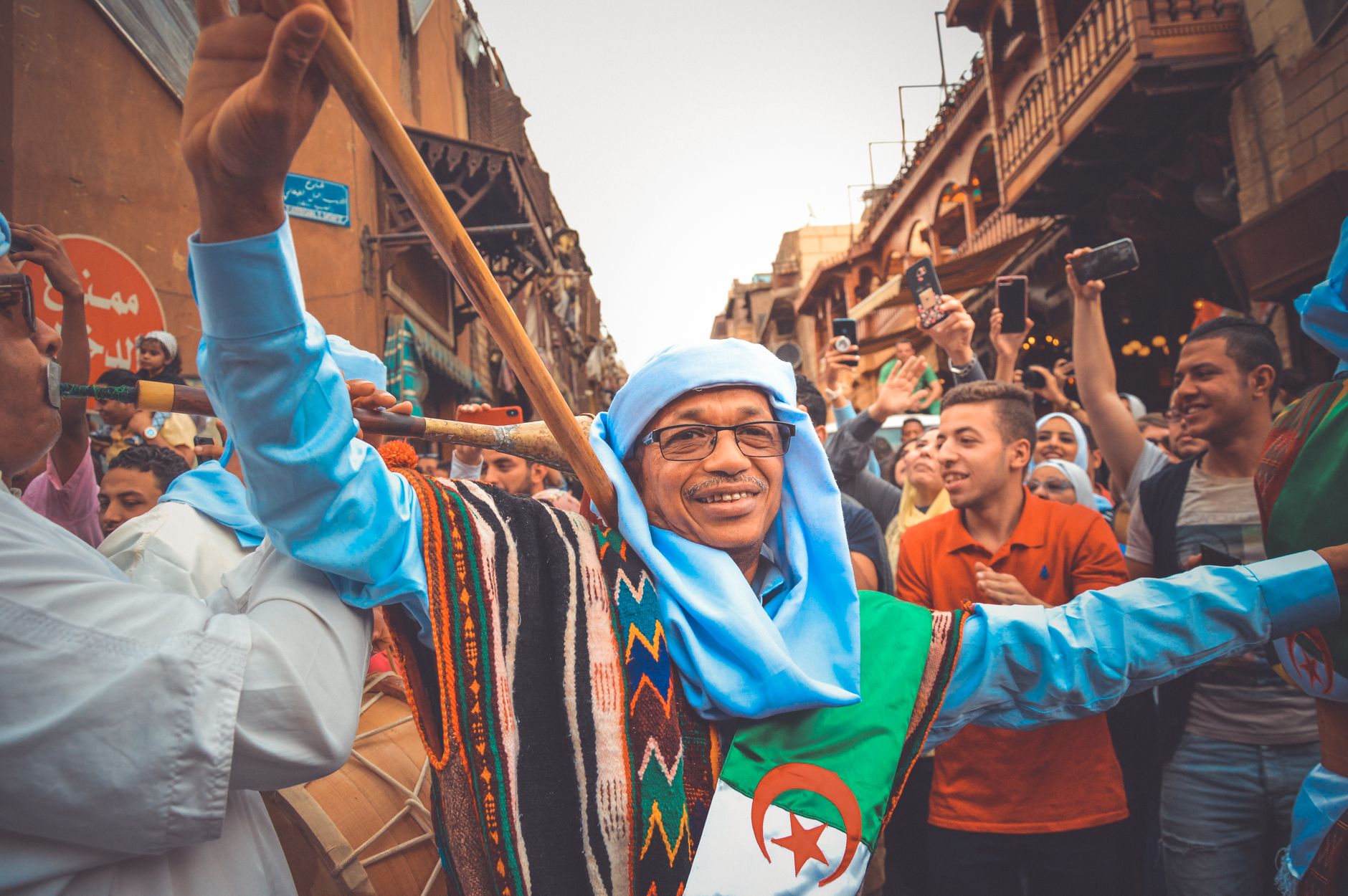
Photo by Bishoy Milad on Pexels
Myth 1: Is Algeria only Riyad Mahrez’s team? — debunked
No. Algeria has depended on Riyad Mahrez for decisive quality, but its competitive ceiling rests on collective depth across defence, midfield, and attack. The current player pool includes Aïssa Mandi, Ramy Bensebaini, Rayan Aït-Nouri, Houssem Aouar, Amine Gouiri, and Ibrahim Maza, giving the team several routes to create chances.
The Mahrez narrative is attractive because the winger has the clearest global profile. He won the Premier League with Manchester City, produced 2 goals and 1 assist in ESPN’s displayed four-appearance sample, and remains Algeria’s most recognisable attacking reference. However, a team that requires one player to create every meaningful chance becomes easy to defend against. Opponents can double the right flank, block the passing lane into Mahrez, and force Algeria into predictable crosses. That is a tactical problem, not a popularity contest.
The deeper value lies in role distribution. Aït-Nouri can advance from the left, Aouar can operate between midfield and attack, and Gouiri can drop away from the centre-backs before attacking space. Maza’s displayed 11 shots and 3 shots on target across four appearances also indicate a young midfielder willing to take responsibility rather than simply recycle possession. Football Insights therefore rates Algeria’s attacking structure above its individual branding: Mahrez is the premium asset, but the portfolio is not built around one holding.
- Mahrez supplies ball progression, set-piece quality, and final-third decisions.
- Aït-Nouri stretches defensive lines from the left.
- Aouar connects midfield possession to attacking runners.
- Gouiri offers movement between the centre-back and full-back channels.
- Maza adds youth, shot volume, and tactical unpredictability.
This matters for match prediction. If Mahrez is tightly marked but Algeria still creates shots through the left side and central midfield, the team remains dangerous. If every attack ends at Mahrez’s feet, the price on Algeria may look attractive while the underlying performance is weak. That distinction is where disciplined analysis beats highlight-reel thinking.
Myth 2: Is Algeria tactically chaotic? — partially true
Algeria is not tactically empty, but its performance can become unstable when the midfield loses control or the full-backs advance simultaneously. The team’s best structure combines possession, wide overloads, and immediate counterpressure; its weakest version leaves space behind the defensive line and becomes dependent on individual recovery runs.
The 2019 Africa Cup of Nations triumph showed the financial value of a coherent tournament plan. Algeria did not need to dominate every minute; it needed to protect central areas, release its attacking players quickly, and punish opponents during transitions. That approach remains relevant in CAF competition, where travel, heat, pitch quality, and compact defensive blocks can reduce the usefulness of pure possession statistics. A 60% possession figure is not automatically superior to 42% possession if the lower-possession side produces the higher-quality chances.
The squad data exposes both upside and risk. In the displayed sample, Aït-Nouri made 4 appearances, registered 1 shot, and committed 6 fouls, while Farès Chaïbi produced 9 shots and 3 shots on target. Those numbers are not a complete scouting report, but they reveal how Algeria can generate threat from more than one zone. At the same time, Ramiz Zerrouki’s listed yellow card and the disciplinary figures attached to several defenders underline a practical concern: aggressive midfield pressure can become expensive when Algeria arrives late.
A balanced Algeria usually needs three safeguards:
- One midfielder must remain behind the ball when both full-backs push forward.
- The nearest winger must press the opposition full-back rather than watch the centre-back circulate possession.
- Centre-backs must defend the first transition pass, not only the final cross.
A practitioner’s edge appears here. When analysing Algeria, record the first five minutes after losing possession, not merely total possession or final score. If the team wins the ball back within roughly 6–8 seconds on repeated sequences, its structure is functioning. If opponents escape the first press with one forward pass, the match can turn into an open exchange, which usually increases variance and weakens conservative betting positions.
[Internal Link: Algeria tactical analysis and formation guide]

Photo by Ben Khatry on Pexels
Want a sharper view of Algeria’s tactical profile? Football Insights tracks pressing patterns, player roles, and match-state changes for 2026 coverage.
Myth 3: Is Algeria already a 2026 World Cup contender? — flat-out false
Algeria has credible tournament ingredients, but calling the team an established 2026 World Cup contender before evaluating qualification form, draw difficulty, injuries, and defensive consistency is premature. Historical strength and famous names improve the forecast; they do not guarantee qualification or knockout-stage success.
The Desert Foxes have a powerful record in continental football. Algeria won the Africa Cup of Nations on home soil in 1990 and again in Egypt in 2019, then reached the 2014 World Cup round of 16 after finishing above Russia in Group H. Those achievements prove that Algeria can manage pressure, adapt to tournament football, and produce high-level performances. They also create a dangerous analytical trap: past tournament success is often treated as a current performance metric.
The 2026 cycle requires a different calculation. The expanded FIFA World Cup format offers Africa 9 direct qualification places plus an additional play-off route, but the path still depends on group results and consistency. FIFA’s official World Cup 2026 competition information confirms the tournament’s 48-team structure, while the Confederation of African Football remains the authoritative source for African qualifying schedules and regulations. Algeria must therefore be judged against current opponents, not only against the emotional memory of 2019.
Three variables deserve a heavier weighting than reputation:
- Defensive availability: Mandi and Bensebaini provide experience, but age profile and rotation matter.
- Midfield control: Zerrouki, Aouar, Bentaleb, and Maza offer different skill sets, yet the balance must survive pressing teams.
- Chance conversion: Mahrez and Gouiri can create decisive moments, but Algeria cannot rely on a low-volume attack every match.
The contrarian conclusion is straightforward: Algeria’s best 2026 indicator may not be how many goals Mahrez scores. It may be the number of matches in which Algeria concedes the opening goal and still produces enough structured attacks to recover. That scenario tests squad resilience, bench quality, and coaching adjustments far better than a comfortable win over a weaker opponent.
What actually works
The most reliable way to evaluate the Algeria national football team is to combine tournament context, player availability, tactical matchups, and measurable chance creation. A single ranking, possession percentage, or famous-player count is too blunt to price performance accurately. Football Insights uses a layered process because the cheapest-looking prediction is often the most expensive mistake.
Start with the opponent’s defensive behaviour. A compact low block changes Mahrez’s value because he receives less space to run into, while a high defensive line can create the exact channels that Mahrez, Gouiri, and Aït-Nouri exploit. Next, check whether Algeria’s midfield has a progressive passer available. Without that player, the team may circulate the ball safely but fail to move the opponent’s defensive block.
Then examine the match environment. CAF fixtures can involve long travel, unfamiliar surfaces, high temperatures, and intense home support. These conditions influence tempo and fatigue, especially after the 60th minute. An apparently superior Algeria side may have a strong first-half edge but a weaker late-game profile when pressing intensity falls.
The following checklist produces a more defensible forecast:
- Confirm the starting goalkeeper and central-defensive pairing.
- Check whether Mahrez starts, is rested, or moves into a narrower role.
- Compare Algeria’s expected width with the opponent’s full-back positioning.
- Track shots on target rather than total shots alone.
- Estimate set-piece danger from both teams.
- Review cards and foul patterns before considering aggressive markets.
- Separate qualification pressure from friendly-match motivation.
- Recalculate after confirmed line-ups, not after rumours.
A useful operational rule is to wait for line-up confirmation before making a strong judgement on Algeria’s attacking ceiling. In ESPN’s displayed squad sample, Luca Zidane recorded 3 appearances, 8 saves, and 6 goals conceded, while Oussama Benbot had 1 appearance and 3 goals conceded. Those figures are small samples, but they demonstrate why goalkeeper selection can materially alter a pre-match view. The market may price “Algeria” as a single entity; the analyst must price the actual XI.
[Internal Link: World Cup match prediction methodology]

Photo by Gerardo Trujillo on Pexels
Get the numbers behind the headline names before choosing a match angle.
What should you ignore?
Ignore narratives that convert Algeria’s identity into a simplistic betting signal. “Mahrez will decide everything,” “Algeria always dominates Africa,” and “a famous squad guarantees goals” are emotionally satisfying claims, but none is a repeatable model. The correct question is whether the tactical matchup creates enough high-quality opportunities at a price that compensates for the risks.
Do not overvalue historical head-to-head records. A result from 2014 may involve a different manager, goalkeeper, defensive line, formation, and tournament incentive. Historical data can identify rivalry pressure or recurring stylistic problems, but it should receive less weight than the latest 5–10 competitive matches, especially when the squad has changed materially.
Do not confuse shots with danger. Chaïbi’s listed 9 shots and 3 shots on target are more useful than a raw total only when we know location, game state, and opponent quality. A long-range attempt while trailing by two goals is not equivalent to a close-range chance created during a level match. The same principle applies to possession: Algeria can dominate the ball while producing low-value attacks if the opponent protects the penalty area successfully.
Finally, avoid chasing late price movement without identifying its cause. A shortened Algeria price may reflect confirmed Mahrez availability, an opponent injury, or simply public money arriving on a recognisable national team. Those are not equivalent signals. The practical approach is to document the original probability, the market price, and the information that changed the estimate; if the explanation is missing, the apparent edge is probably only noise.
[Internal Link: responsible football betting principles]
The FIFA World Cup 2026 information hub provides official tournament context, while CAF updates should be checked for qualification and squad news. FIFA’s competition framework emphasises that “the tournament will feature 48 teams,” a structural change that increases the number of matches and expands the range of possible tactical outcomes. That does not make Algeria automatically stronger; it makes disciplined preparation more valuable.

Photo by Anastasia Shuraeva on Pexels
Algeria national football team: final verdict
Algeria is a serious African football power with enough technical quality to threaten strong opponents, but its 2026 outlook depends on structure more than celebrity. Mahrez remains an elite chance creator, yet Aït-Nouri, Bensebaini, Mandi, Aouar, Gouiri, Chaïbi, Zerrouki, and Maza determine whether the team can sustain pressure across 90 minutes. The best version of Algeria controls central transitions, attacks through both flanks, protects its centre-backs, and converts set pieces without becoming dependent on them.
The value-for-money conclusion is equally clear. Backing Algeria solely because it is Algeria is weak analysis; evaluating line-ups, opponent shape, travel demands, goalkeeper selection, and shot quality creates a genuine information advantage. Track the first transition after turnovers, compare shots on target, and downgrade historical reputation when current defensive evidence points the other way. That is how we turn a famous team into a measurable team.
Want Football Insights’ latest Algeria and 2026 World Cup analysis?
Frequently Asked Questions
Q: What is the Algeria national football team?
A: The Algeria national football team represents Algeria in men’s international football under the Confederation of African Football and FIFA. Known as the Desert Foxes, Algeria won the Africa Cup of Nations in 1990 and 2019 and reached the 2014 World Cup round of 16. The team traditionally combines technically gifted attackers, physically strong defenders, and fast transition play. Its home matches are closely followed across Algeria, France, and the wider North African diaspora.
Q: How does Algeria qualify for the 2026 World Cup?
A: Algeria must finish strongly in its CAF qualification group to secure a direct place at the 2026 FIFA World Cup. Africa has 9 direct qualification places plus an additional play-off route under the expanded 48-team tournament format. Supporters should verify the latest group table, remaining fixtures, goal difference, and CAF regulations before assessing Algeria’s qualification probability. A strong squad is not enough if dropped points against lower-ranked opponents create a mathematical deficit.
Q: Is Riyad Mahrez still Algeria’s most important player?
A: Riyad Mahrez remains Algeria’s most influential attacking player, but he is not the team’s only decisive asset. His ball control, left-footed delivery, and ability to create from the right side make him particularly valuable against defensive blocks. However, Aït-Nouri, Aouar, Gouiri, Bensebaini, and Maza must share progression and chance creation. If opponents can isolate Mahrez, Algeria needs a functioning left flank and central midfield to maintain its attacking threat.
Q: What is the difference between Algeria’s 2019 team and its 2026 squad?
A: Algeria’s 2019 team was built around a highly cohesive tournament structure, while the 2026 squad includes more generational transition and competition for places. The 2019 side benefited from established chemistry and a proven continental-winning system. The newer group includes experienced figures such as Mandi, Bensebaini, and Mahrez alongside younger players such as Maza and Aït-Nouri. Comparing the two directly is less useful than measuring defensive stability, midfield control, and chance quality in current fixtures.
Q: Why might Algeria struggle in a World Cup match?
A: Algeria may struggle when opponents bypass its first press, attack the space behind advanced full-backs, or force the midfield into repeated defensive recoveries. Disciplinary pressure can also matter because aggressive pressing produces fouls and bookings, particularly in high-tempo matches. Another risk is over-reliance on Mahrez for final-third creation. Analysts should monitor transition concessions, goalkeeper selection, and the team’s response after conceding first rather than relying only on Algeria’s historical reputation.
Q: Is Algeria a good team to back in football betting?
A: Algeria can offer value when the tactical matchup, confirmed line-up, and market price support the forecast, but national identity alone is not a betting edge. Compare Algeria’s recent competitive performances with opponent quality, shots on target, defensive availability, travel conditions, and expected game state. Avoid chasing a shortened price caused only by public support for Mahrez or the Desert Foxes. Any wager should fit a fixed bankroll plan and comply with the laws and age requirements of the bettor’s jurisdiction.
Q: Where can I follow Algeria national team statistics and World Cup analysis?
A: Official tournament and qualification information should come from FIFA and CAF, while squad statistics can be cross-checked through reputable sports data providers such as ESPN. Football Insights adds tactical analysis, match predictions, player trends, and 2026 World Cup coverage in one editorial workflow. Before a match, compare the confirmed squad list, recent minutes, shots on target, cards, injuries, and formation. That process produces a more reliable view than reading a single ranking or headline.
Football Insights � Editorial Archive � Volume IV