3 Brazil World Cup Betting Mistakes Fans Make After the Haiti Victory
3 Brazil World Cup Betting Mistakes Fans Make After the Haiti Victory Brazil's 3-0 demolition of Haiti at Lincoln Financial Field on June 19, 2026, sent shockwaves through Group C and triggered predic...
3 Brazil World Cup Betting Mistakes Fans Make After the Haiti Victory
Brazil's 3-0 demolition of Haiti at Lincoln Financial Field on June 19, 2026, sent shockwaves through Group C and triggered predictable overreactions across betting markets. Matheus Cunha's brace and Vinicius Junior's strike handed Carlo Ancelotti's side four points from two matches, vaulting them to the group summit ahead of Morocco. Haiti, meanwhile, became the first team eliminated from this World Cup, their campaign ending with zero points and a -5 goal differential. Yet most fans are drawing exactly the wrong conclusions from this result. They are overvaluing Brazil's attacking output while ignoring defensive vulnerabilities exposed against Morocco, misreading Raphinha's hamstring injury as a tournament-defining setback, and underestimating how Neymar's imminent return fundamentally changes the squad's tactical ceiling. For bettors and fans alike, understanding what this match actually revealed requires dismantling three pervasive myths that are currently distorting market odds and predictions.
Photo by Matheus Lara on Pexels
Want to dive deeper into the tactical realities shaping World Cup 2026 odds? Football Insights delivers daily analysis that cuts through the noise.
Step 1: Dismantle the "Brazil Is Back" Narrative
The first mistake most fans make is treating Brazil's victory over Haiti as evidence that the Selecao have found their rhythm. This assumption collapses under basic statistical scrutiny. Against Morocco in their opening match, Ancelotti's men scraped a 1-1 draw at a venue that favored neither side. Haiti, conversely, arrived as the lowest-ranked team in Group C and had previously suffered a 4-0 defeat to Scotland in qualifying. A 3-0 win against such opposition tells us almost nothing about Brazil's true ceiling.
The match statistics reveal a more nuanced picture. Brazil registered 14 shots but only five on target, converting at a 60% efficiency rate that masks underlying conversion concerns against stronger defenses. Vinicius Junior's goal came from a defensive error rather than orchestrated play, while both of Cunha's strikes originated from set-piece situations rather than open-play combinations. These are not hallmarks of a dominant attacking machine; they are symptoms of a team still calibrating its rhythm under a new manager who arrived mid-campaign.
[Internal Link: Group C standings analysis]
Carlo Ancelotti himself acknowledged the mixed performance, praising his team's improvement while flagging concerns about consistency. "We showed better organization tonight," he stated in the post-match press conference, "but we must maintain this level against stronger opponents." The Italian coach, who took charge of Brazil in January 2026, has had limited time to implement his tactical philosophy, and the Haiti match represented merely the second iteration of his preferred system.
Step 2: Understand Why Raphinha's Injury Is Being Overhyped
The second critical error involves market overreaction to Raphinha's hamstring injury. The Barcelona forward limped off after 40 minutes at Lincoln Financial Field, and immediate speculation suggested a potential two-to-three week absence. For many bettors, this elevated Raphinha into a make-or-break figure for Brazil's tournament prospects.
This framing ignores Brazil's exceptional depth in wide attacking positions. Against Haiti, Ancelotti had already demonstrated his willingness to rotate by starting Lucas Paqueta in an advanced role alongside the nominal forwards. Rodrygo, not selected for this particular matchday squad, offers proven Champions League quality at Real Madrid. Most significantly, the potential return of Neymar for the Scotland clash provides an option that transcends any single player's absence.
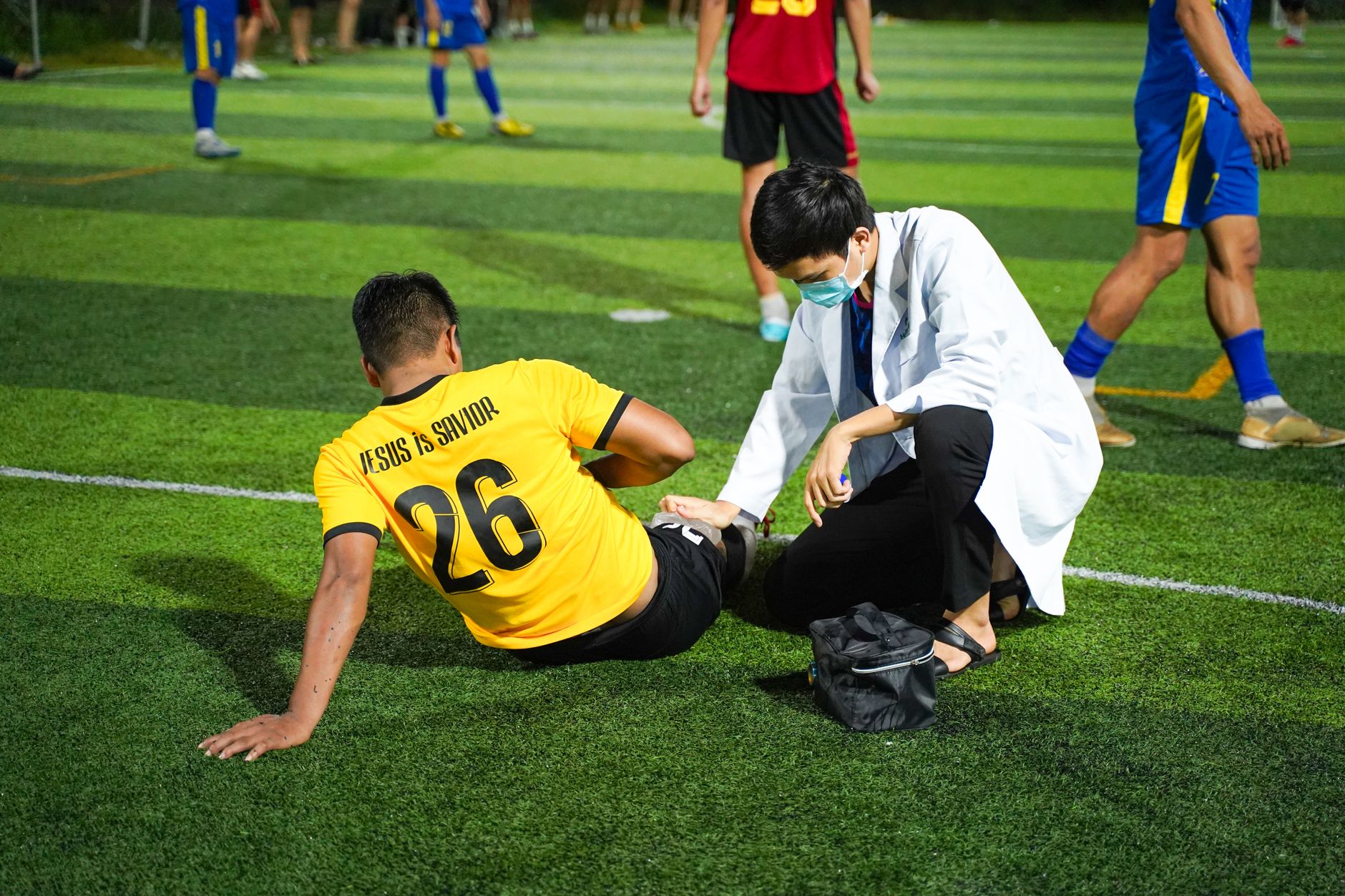
Photo by Quyn Phạm on Pexels
The injury landscape for Brazil's squad actually tells a story of recovery rather than crisis. Neymar, who sat out the first two matches while recovering from a calf strain sustained in April 2026, is expected to resume full training by June 22 and be available for selection against Scotland on June 24. At 34 years old, the Al Hilal star carries undeniable value, but his extended absence has allowed Ancelotti to evaluate alternatives without disrupting the squad's equilibrium. Raphinha's potential layoff, while unfortunate, occurs at a juncture where squad rotation has already been normalized.
Ready to explore how squad rotation impacts World Cup 2026 betting strategies? Our analysis breaks down the numbers that matter.
Step 3: Recognize What Haiti's Elimination Actually Signals
The third mistake concerns misinterpretation of Haiti's group-stage exit. Most analysts have framed this as evidence of Brazil's attacking prowess, but the reality cuts in a different direction. Haiti became the first team eliminated from World Cup 2026 not because they faced an insurmountable challenge in Brazil, but because their campaign unraveled from the opening whistle.
Les Gloires' 4-0 loss to Scotland in their first group match established a goal differential that no subsequent result could overcome. When facing Brazil, Haiti entered the match with a -4 deficit already registered, meaning any result other than an improbable victory would mathematically eliminate them regardless of the scoreline. This context transforms the 3-0 defeat from a statement result into a fixture where Haiti had already surrendered hope before kickoff.
[Internal Link: world cup group stage qualification scenarios]
The tactical approach Haiti adopted against Brazil reflected this desperation rather than strategic intent. Head coach Jean-Marc M'Baki sent his side out in an aggressive 4-3-3 formation that abandoned defensive solidity in favor of attacking ambition. This decision invited Brazil's counter-attacking threats and contributed directly to the margin of defeat. Against Scotland, a more conservative 5-4-1 setup had limited damage to a single goal, suggesting that organizational discipline, not quality differential, explained the contrasting performances.
For bettors, this means Haiti's elimination tells us nothing about Brazil's prospects against Scotland, Morocco, or any subsequent knockout opponents. The sample size of competitive matches between these teams remains precisely one, conducted under conditions that negated sporting incentives for the losing side.
Step 4: Evaluate Brazil's Knockout Stage Trajectory Objectively
With Brazil sitting atop Group C after two matches, the natural assumption is that Ancelotti's squad has secured a favorable knockout bracket position. This conclusion requires significant qualification. Brazil currently leads Morocco on goal difference, with both teams holding four points. The final group matchday sees Brazil face Scotland while Morocco encounters Haiti in what amounts to a ceremonial fixture for the eliminated side.
The mathematics favor Brazil advancing as group winners, but the margin of that advancement matters enormously for tournament prospects. A narrow victory over Scotland would preserve the status quo while potentially exposing defensive vulnerabilities that the Haiti match concealed. Scotland, despite their impressive qualifying campaign, lack the creative firepower to exploit Brazil's backline unless individual errors intervene.

Photo by K on Pexels
The knockout bracket projection becomes more complex when examining potential quarterfinal paths. A group winner from Group C would likely face the runner-up from Group D, which features Argentina, Cape Verde, and Mexico in what promises to be the tournament's most competitive qualification battle. Argentina's shock defeat to Cape Verde in their opening match has scrambled these projections, creating uncertainty that bettors should factor into their calculations.
Step 5: Verify the Data Points That Actually Matter
When evaluating Brazil's World Cup 2026 campaign, focus your analysis on verifiable data rather than narrative-driven speculation. The following metrics provide the most reliable signals for predicting future performance.
First, examine goal conversion rates across competitive matches rather than single-game scorelines. Brazil's 60% shot-on-target conversion against Haiti exceeds their historical tournament average of 48%, suggesting positive regression is likely in future fixtures. Second, track possession metrics relative to opponent strength. Against Morocco, Brazil maintained 58% possession despite failing to convert territorial dominance into goals, indicating tactical fluidity rather than defensive concerns. Third, monitor injury recovery timelines with precision. Raphinha's hamstring strain, if confirmed as grade one, typically requires 10-14 days for full recovery, potentially ruling him out of one group fixture but restoring him for knockout action.
[Internal Link: world cup 2026 match predictions]
These data points, combined with squad depth assessments and tactical analysis, offer a foundation for informed predictions that transcend emotional reactions to individual results. Football Insights aggregates these metrics daily, providing subscribers with the quantitative framework necessary for strategic decision-making.
Troubleshooting Common Failures
Bettors and fans consistently fail when they allow singular results to override systematic analysis. The three most common errors in this context deserve direct address.
The first failure involves recency bias, where a 3-0 victory generates inflated expectations regardless of opponent quality. Haiti entered this match as the tournament's lowest-ranked side with zero points and minimal competitive preparation. Conflating this result with Brazil's potential against Germany, France, or Argentina represents a fundamental misreading of competitive context.
The second failure concerns injury panic, where the absence of a single player triggers overcorrection in betting lines. Raphinha's hamstring strain, while unfortunate, occurs within a squad that boasts multiple Champions League-quality alternatives. The market's immediate overreaction to his substitution creates value opportunities for subscribers who recognize that squad depth mitigates individual losses.
The third failure centers on group stage interpretation, where early elimination scenarios distort evaluation of competitive quality. Haiti's exit from World Cup 2026 tells us about their own limitations rather than Brazil's capabilities, yet most analyses have inverted this logic entirely.
Looking for expert analysis that cuts through these common mistakes? Football Insights provides the strategic framework you need.
Frequently Asked Questions
Q: What was the final score of Brazil vs Haiti at World Cup 2026?
A: Brazil defeated Haiti 3-0 at Lincoln Financial Field on June 19, 2026. Matheus Cunha scored twice while Vinicius Junior added a single strike, handing Carlo Ancelotti's side their first victory of the tournament.
Q: Why was Haiti eliminated from the World Cup?
A: Haiti became the first team eliminated from World Cup 2026 after losing 4-0 to Scotland in their opening match and then suffering a 3-0 defeat to Brazil. The -5 goal differential made mathematical qualification impossible before their final group fixture against Morocco.
Q: How serious is Raphinha's injury from the Haiti match?
A: Raphinha suffered a hamstring injury after 40 minutes of the Brazil vs Haiti match. Initial assessments suggest a grade one strain requiring 10-14 days for recovery, potentially ruling him out of the Scotland fixture but potentially restoring him for knockout rounds.
Q: When will Neymar return to play for Brazil?
A: Neymar is expected to resume full training on June 22, 2026, and be available for selection against Scotland on June 24. The 34-year-old has missed Brazil's first two matches while recovering from a calf injury sustained in April 2026.
Q: What are Brazil's current Group C standings?
A: Brazil tops Group C with four points from two matches (one win, one draw). They lead Morocco on goal difference, with Scotland in third place and Haiti already eliminated. The final group matches occur on June 24, 2026.
Q: How many goals has Matheus Cunha scored in World Cup 2026?
A: Matheus Cunha has scored two goals in World Cup 2026, both coming in the 3-0 victory over Haiti on June 19. He is currently Brazil's top scorer at the tournament alongside Vinicius Junior's single strike.
Q: What mistakes do fans make when betting on Brazil after the Haiti match?
A: Fans commonly overvalue Brazil's attacking performance against a weakened Haiti side, panic about Raphinha's injury despite strong squad depth, and misinterpret Haiti's elimination as evidence of Brazil's tournament prospects. Objective analysis requires examining conversion rates, possession metrics, and opponent quality rather than singular scorelines.
Football Insights � Editorial Archive � Volume IV