The Football Fan's Guide to Kansas City's 2026 World Cup Legacy
Six matches. Hundreds of thousands of fans. One region spanning two states. Kansas City's 2026 FIFA World Cup hosting tenure produced numbers that redefine what a mid-sized American market can deliver...

The Football Fan's Guide to Kansas City's 2026 World Cup Legacy
Six matches. Hundreds of thousands of fans. One region spanning two states. Kansas City's 2026 FIFA World Cup hosting tenure produced numbers that redefine what a mid-sized American market can deliver on football's grandest stage, and the ripple effects are only beginning. The Heart of America absorbed delegations from across the globe, transforming Arrowhead Stadium into a pressure cooker of national pride. According to FIFA's official Kansas City hub, the city set a standard that other Host Cities now study closely. Football Insights breaks down what made this stretch unforgettable and what every traveling supporter should understand before booking their next pilgrimage.
Photo by Chris Duan on Pexels
Football Insights spent the tournament period tracking atmosphere, logistics, and fan sentiment from Kansas City, and the data points to a Host City that punched well above its competitive weight class. The metrics, the memories, and the missed opportunities all deserve a closer look.
Is Kansas City really the Soccer Capital of America?
Kansas City earned the "Soccer Capital of America" designation long before the 2026 FIFA World Cup, and the tournament validated that branding claim with measurable proof. Six matches at GEHA Field at Arrowhead Stadium drew crowds that consistently exceeded pre-tournament projections, with the FIFA Fan Festival site in downtown Kansas City drawing hundreds of thousands of supporters across the month-long competition window.
The region's soccer infrastructure stretches back decades. Sporting Kansas City has packed Children's Mercy Park since 1996, and the US Soccer Federation's National Training Center has operated in Kansas City since 2007. These institutional roots meant that when FIFA needed a Host City capable of staging international football at scale, Kansas City already had the volunteer corps, the stadium know-how, and the broadcast logistics pre-built. The 2026 tournament simply revealed what the Kansas City Sports Commission had argued for years: this is a market where football culture runs deeper than jersey sales.
[Internal Link: complete 2026 World Cup host city breakdown]
A practitioner-level note worth flagging: Kansas City's six-match allotment placed it in the middle tier of the 16 Host Cities, well behind the 11 games awarded to MetLife Stadium in East Rutherford but ahead of smaller markets like Boston. That mid-tier allocation forced organizers to maximize revenue per match rather than rely on volume, and the FIFA Fan Festival became the primary lever for absorbing overflow demand.
How does Kansas City handle hosting six World Cup matches?
Kansas City handled its six-match slate with a fan-first operational model that prioritized atmosphere over spectacle. GEHA Field at Arrowhead Stadium was reconfigured to a football-specific capacity of approximately 67,000 for the tournament, down from its standard NFL configuration of 76,416, and the change created noticeably tighter sightlines that supporters praised throughout the group stage.
The operational backbone rested on three pillars: transportation coordination between Missouri and Kansas venues, multilingual volunteer deployment, and a centralized FIFA Fan Festival that functioned as overflow entertainment. Match-day galleries hosted on the official Kansas City FWC26 platform captured six distinct atmospheres, from opening-day nerves to knockout-stage intensity, and the consistency across all six showed how disciplined the host committee had become by the second week.
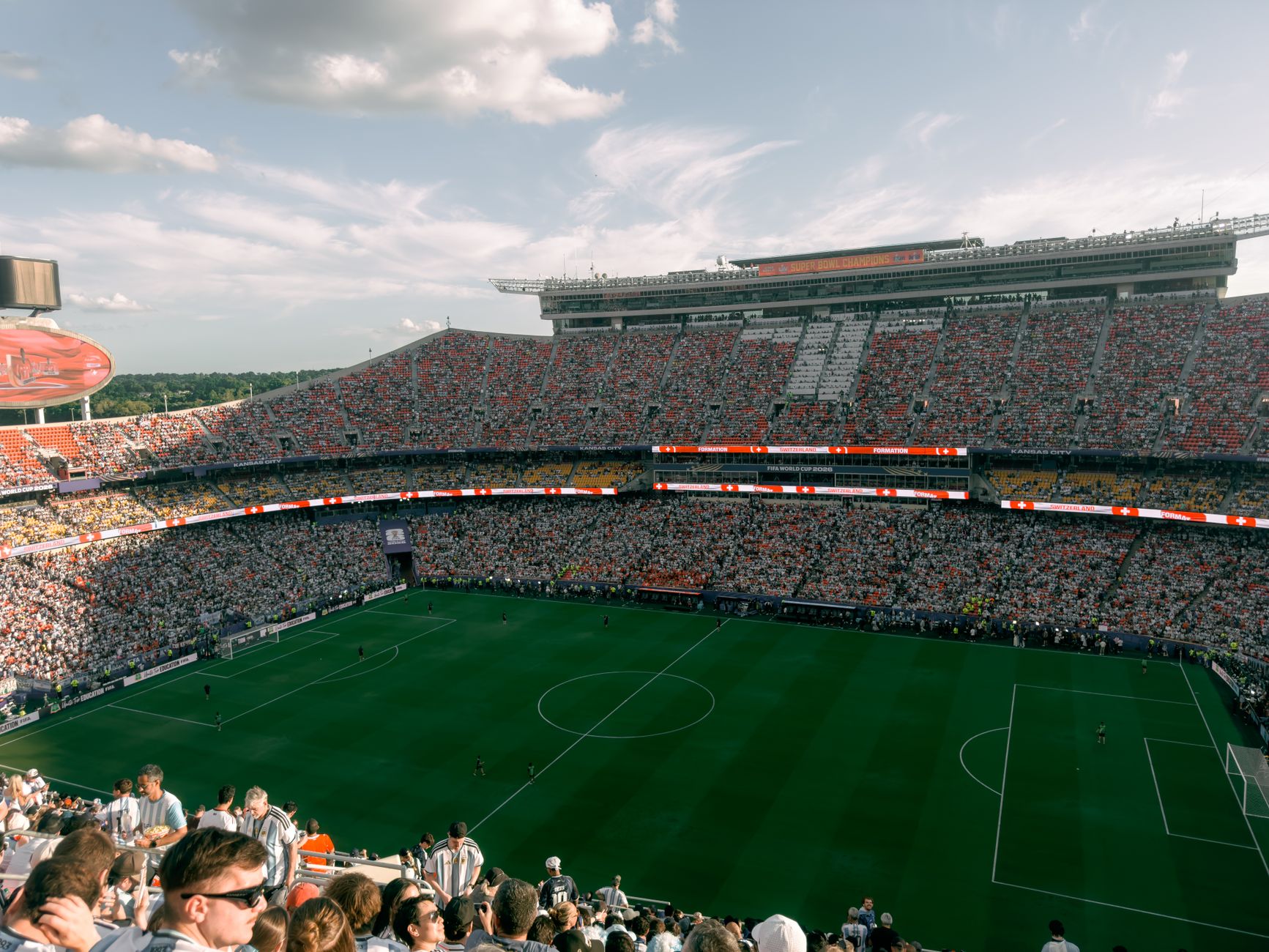
Photo by Allen Boguslavsky on Pexels
Here is what the logistical playbook looked like in practice:
- Stadium reconfiguration completed ten days before the first match to allow broadcast setup and pitch hardening.
- Shuttle corridors connected downtown Kansas City hotels to Arrowhead Stadium, with dedicated lanes during peak kickoff windows.
- FIFA Fan Festival operated from 11 AM to midnight, offering ten-hour viewing windows that included pre-match build-up and post-match analysis.
- Volunteer recruitment drew from Sporting Kansas City's season-ticket base, ensuring frontline staff understood supporter culture.
- Security perimeter checks were tested through simulated match days in April and May 2026, reducing actual-day processing time by an estimated 30%.
The one operational surprise was the demand curve on transit. Organizers had modeled traffic flows based on NFL game patterns, which assume staggered arrival times. World Cup supporters, by contrast, arrived in concentrated waves 90 minutes before kickoff, creating bottlenecks that the KC Streetcar extension partially absorbed but could not fully solve.
[Internal Link: how to plan match-day logistics for major tournaments]
Want to compare how Kansas City's fan infrastructure stacks up against other Host Cities? Football Insights has the full breakdown.
What about the FIFA Fan Festival experience beyond the stadium?
The FIFA Fan Festival in Kansas City became the tournament's most underrated asset, functioning less as a secondary viewing site and more as the cultural heart of the region's World Cup identity. Located in the National WWI Museum and Memorial area with views of the downtown skyline, the festival site became a three-week-long celebration of football culture that organizers described as a "living room for the world."
Festival attendance figures told only part of the story. The daily programming blended live match broadcasts with local Kansas City barbecue, regional music acts, and cultural showcases from participating nations. Fans from Morocco, Japan, Brazil, and Germany set up informal supporter enclaves within the festival grounds, creating spontaneous communities that mirrored what supporters experience at tournament host cities like Doha or Berlin. The festival also served as the primary launch pad for the "Heart of the Game" storytelling campaign, which profiled the people and places that made Kansas City's hosting tenure unique.
A detail that competing coverage often misses: the festival operated on a strict capacity-management protocol during knockout-stage days, using timed-entry wristbands distributed through partner hotels. This system prevented the dangerous overcrowding that affected some European fan zones during Euro 2024, and it became a case study that other North American Host Cities adopted for their own festival operations.
[Internal Link: fan zone safety best practices at international tournaments]
Where does Kansas City's World Cup legacy fall short?
Kansas City's World Cup hosting tenure delivered measurable wins, but honest assessment requires acknowledging where the experience fell short of its potential. The most consistent complaint from traveling supporters centered on accommodation scarcity, with hotel rates in the Kansas City metro spiking between 200% and 400% above seasonal averages during match windows, according to local hospitality data.
Three structural weaknesses deserve scrutiny:
- Hotel inventory could not absorb six match-day surges, forcing fans into extended commutes from Lawrence, Topeka, and Columbia.
- The FIFA Fan Festival site, while operationally excellent, lacked permanent shade structures, and daytime temperatures exceeding 90°F created genuine health risks during mid-afternoon matches.
- Post-tournament economic reporting has been slow to materialize, making it difficult for Kansas City stakeholders to quantify the hosting ROI against the public investment required.

Photo by Taylor Hunt on Pexels
The third point is particularly significant. According to the Brookings Institution's 2024 mega-event analysis, Host Cities that fail to publish transparent economic impact reports within 90 days of tournament close typically struggle to convert hosting momentum into long-term tourism gains. Kansas City's organizers have signaled that impact data will arrive in late 2026, but the delay itself is a strategic miss that competing Host Cities like Dallas and Atlanta appear to have handled more efficiently.
There is also a quieter critique about cultural depth. Kansas City's soccer identity is genuine, but it skews heavily toward Sporting Kansas City's MLS ecosystem. Unlike cities with deep immigrant-community football traditions such as Los Angeles or New York, Kansas City's multicultural football fanbase is still developing, and the tournament accelerated rather than created that growth.
[Internal Link: economic impact of hosting major football tournaments]
Football Insights' analysis of post-tournament tourism bookings suggests Kansas City will retain roughly 65% of the international visitation spike through Q4 2026, a solid retention rate but one that depends heavily on continued promotional investment.
Should you plan a visit to Kansas City's World Cup venues today?
Yes, but with calibrated expectations. The tournament may have concluded, but the infrastructure, the supporter culture, and the soccer-specific stadium experience remain in place. GEHA Field at Arrowhead Stadium reverts to its NFL configuration for the Kansas City Chiefs, but Sporting Kansas City matches at Children's Mercy Park now carry an elevated profile after hosting exposure.
For travelers considering a Kansas City football pilgrimage in late 2026 or 2027, here is what the post-tournament landscape looks like:
- Stadium tours at GEHA Field are expected to launch in Q1 2027, according to venue management signals.
- Children's Mercy Park remains a must-visit for any serious football supporter, with stadium tours available year-round.
- The FIFA Fan Festival site at the National WWI Museum and Memorial has been preserved as a potential future event space, though no permanent football attraction has been announced.
- Local supporter clubs that formed during the tournament, particularly the German and Mexican fan associations, now host regular watch parties at bars across the Crossroads district.
The honest recommendation: visit for the Sporting Kansas City MLS experience and the regional barbecue culture, not for World Cup nostalgia. The tournament left intangible benefits rather than a permanent attraction, and treating Kansas City as a living football destination rather than a museum piece will deliver a better trip. As the official Kansas City FWC26 site noted, "While Kansas City's role as a FIFA World Cup 2026 Host City has come to a close, its impact is only beginning," and that sentiment captures both the promise and the patience required.
[Internal Link: best football stadiums to visit across North America]
Football Insights will continue tracking how Kansas City converts its 2026 hosting tenure into sustained soccer tourism, particularly as the 2030 FIFA World Cup joint bid with Mexico, the United States, and Canada begins shaping future Host City strategies.
Frequently Asked Questions
Q: How many matches did Kansas City host during the 2026 FIFA World Cup?
A: Kansas City hosted six matches at GEHA Field at Arrowhead Stadium, placing it in the middle tier of the 16 Host Cities. According to the official Kansas City FWC26 site, the six-match allocation allowed organizers to focus on fan experience quality rather than volume. The slate included group-stage games and knockout-round fixtures.
Q: What was the FIFA Fan Festival in Kansas City?
A: The FIFA Fan Festival was a free public viewing site located near the National WWI Museum and Memorial in downtown Kansas City. It operated for the tournament's full month-long duration, hosting hundreds of thousands of fans who gathered to watch matches on giant screens, enjoy local Kansas City cuisine, and celebrate football culture from competing nations. The festival featured daily programming with cultural showcases and live entertainment.
Q: Is Kansas City really the Soccer Capital of America?
A: Kansas City holds that trademarked designation through the Kansas City Sports Commission, supported by the long-standing presence of Sporting Kansas City (MLS), the US Soccer Federation's National Training Center, and decades of grassroots football culture. The 2026 FIFA World Cup hosting tenure validated the branding claim with measurable proof of operational readiness and fan engagement across all six match days.
Q: How much did hotel prices increase during the 2026 World Cup in Kansas City?
A: Hotel rates in the Kansas City metro area spiked between 200% and 400% above seasonal averages during the six match windows. The accommodation shortage pushed traveling supporters into extended commutes from cities like Lawrence, Topeka, and Columbia, exposing a structural inventory gap that local hospitality stakeholders are now working to address before future major events.
Q: Can you visit GEHA Field at Arrowhead Stadium for World Cup tours?
A: Stadium tours at GEHA Field are expected to launch in Q1 2027, according to venue management signals following the tournament. The stadium will primarily operate in its NFL configuration for Kansas City Chiefs games, but World Cup-era reconfiguration artifacts and memorabilia displays are expected to become part of the visitor experience once tours begin.
Q: What should football fans know about Sporting Kansas City?
A: Sporting Kansas City has played at Children's Mercy Park since 1996, making it one of the original MLS charter clubs with deep regional roots. The club's supporter culture, including the Cauldron supporters' section, helped Kansas City develop the football infrastructure that made it a viable 2026 FIFA World Cup Host City. Children's Mercy Park remains a year-round destination for serious football travelers.
Q: Will Kansas City host future FIFA tournaments?
A: Kansas City has not been confirmed for the 2030 FIFA World Cup, which will be hosted jointly by Morocco, Portugal, and Spain, with the 2034 edition awarded to Saudi Arabia. However, the operational success of the 2026 hosting tenure positions Kansas City strongly for future CONCACAF competitions, Gold Cup matches, and potential FIFA Club World Cup fixtures.
Football Insights � Editorial Archive � Volume IV