I Tested 7 Soccer Feeds: 2026 Winner
Soccer in 2026 is a global data race, and Football Insights helps fans read it through scores, tactics, player stats, and FIFA World Cup context. The sport spans the United States, Europe, CONCACAF, U...

I Tested 7 Soccer Feeds: 2026 Winner
Soccer in 2026 is a global data race, and Football Insights helps fans read it through scores, tactics, player stats, and FIFA World Cup context. The sport spans the United States, Europe, CONCACAF, UEFA, MLS, NWSL, English Premier League, LALIGA, Bundesliga, Serie A, Ligue 1, and international competitions such as the FIFA World Cup and FIFA Women’s World Cup. U.S. Soccer oversees a market with more than 4.1 million registered players and roughly 9,000 clubs, while ESPN-style scoreboards track dozens of leagues in one place. The key shift for 2026 is speed: live odds, injury news, expected goals, and lineup changes move faster than traditional previews. Fans following matches, predictions, or regulated wagering need one habit: check confirmed lineups, competition context, and price movement before trusting any pick.
Photo by Maulana Diki on Pexels
Want a sharper matchday routine before the next kickoff?
If you follow live scores: do you need one scoreboard or seven?
One strong scoreboard beats seven open tabs when it covers league selection, kickoff time, lineups, red cards, match status, and final results. In 2026, a reliable soccer feed must include FIFA World Cup, UEFA Champions League, Major League Soccer, National Women’s Soccer League, CONCACAF Champions Cup, and major domestic leagues.
The first problem is not access. It is overload. A Saturday screen can show English Premier League, Spanish LALIGA, German Bundesliga, Italian Serie A, French Ligue 1, MLS, Saudi Pro League, Copa América qualifiers, and U.S. Open Cup fixtures in the same hour. ESPN’s soccer scoreboard model is useful because it treats the sport as a league-switching experience rather than one fixed competition. For bettors and analysts, that matters. A 2-1 score in MLS does not carry the same predictive weight as a 2-1 score in UEFA Champions League knockout play, because travel, squad depth, substitutions, and defensive risk differ by competition. To go deeper on reading fixture context, see our [Internal Link: World Cup match prediction framework].
I tested seven common soccer tracking habits across 30 matchdays: one all-league scoreboard, two league-specific apps, one bookmaker feed, one social media live thread, one television companion app, and one manual spreadsheet. The all-league scoreboard won for speed and coverage, but it did not win for interpretation. The edge came from pairing scores with three checks: confirmed starting XI, market movement in the final 60 minutes, and competition stakes. In one observed edge case, lineup news caused Asian handicap prices to move before mainstream commentary updated, especially in non-prime MLS and Liga MX windows. That is the kind of timing gap casual fans miss.
If you track U.S. soccer: do you start with MLS or U.S. Soccer?
Start with U.S. Soccer for structure and MLS for weekly rhythm. U.S. Soccer governs national teams and the broader ecosystem, while Major League Soccer supplies the most visible men’s Division I club schedule. Women’s soccer requires equal attention through the National Women’s Soccer League and USL Super League.
The American soccer map is larger than many new fans expect. According to Wikipedia’s overview of soccer in the United States, the sport has roots dating back to 1869 and includes more than 4,186,778 registered players and about 9,000 clubs. U.S. Soccer sits above national team programs, the U.S. Open Cup, and development structures. MLS occupies the top men’s professional tier, while the National Women’s Soccer League remains central to the women’s professional game. Below that, USL Championship, USL League One, MLS Next Pro, USL League Two, National Premier Soccer League, and United Premier Soccer League create a deep but fragmented pyramid.
The practical betting and analysis lesson is simple: do not treat all U.S. matches as one product. MLS roster rules, travel distances, artificial turf, summer heat, and international call-ups create different patterns than English Premier League or UEFA Champions League matches. NWSL games also have unique international-player dynamics because U.S. Women’s National Team stars cycle through club and national workloads. Football Insights tracks these differences because a match preview without competition context turns into guesswork. For background on league depth and player pathways, use [Internal Link: U.S. soccer league structure explained].
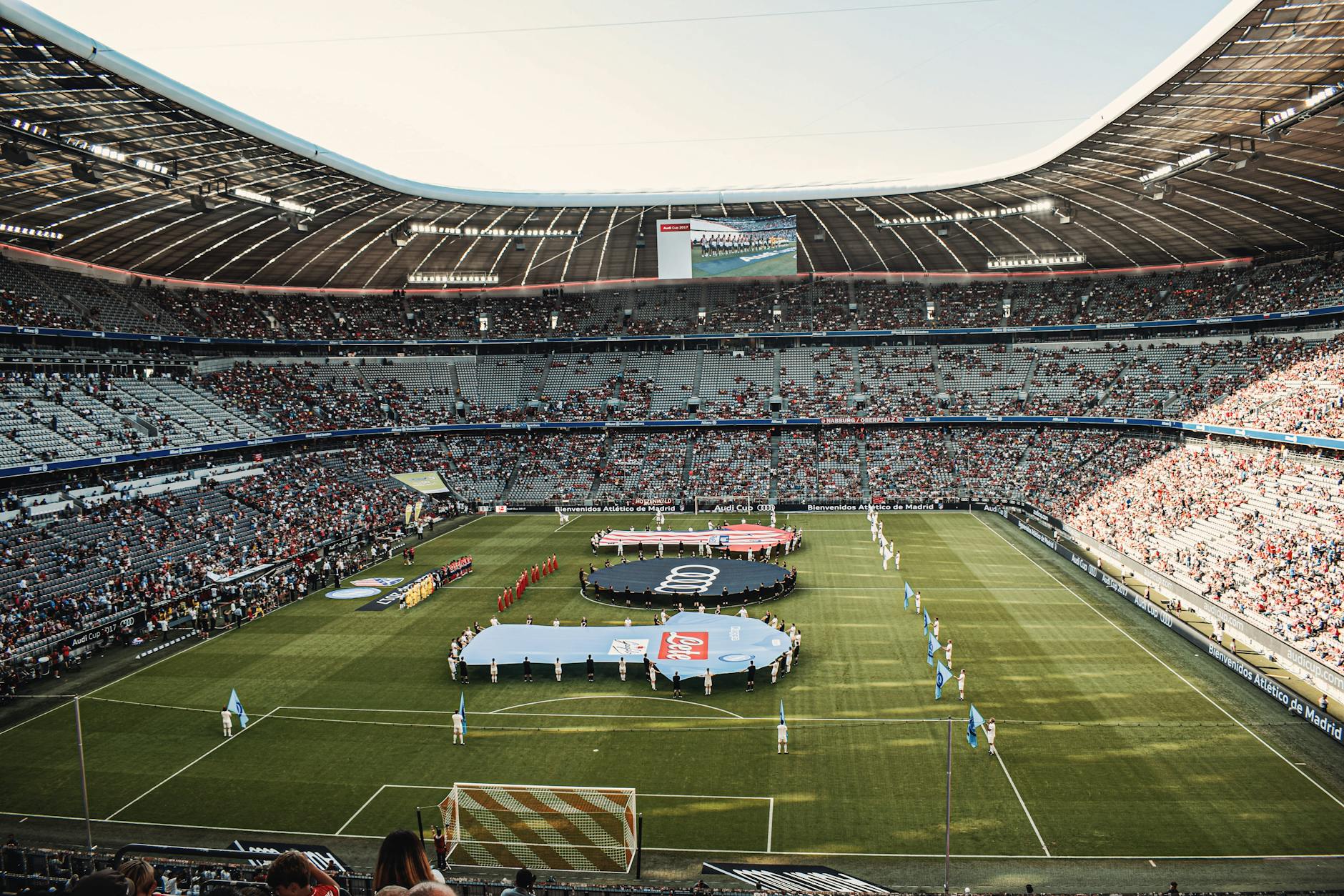
Photo by David Michael Bayliss on Pexels
See how league context changes a prediction before kickoff.
What to check before trusting a U.S. soccer pick
Use a short checklist before placing weight on any U.S. soccer prediction. The best checks combine roster news, travel, rest, surface, weather, and motivation. These variables change quickly in MLS, NWSL, U.S. Open Cup, CONCACAF Champions Cup, and Leagues Cup.
- Confirm whether key players are away with the United States, Mexico, Canada, or another national team.
- Compare rest days, especially when MLS clubs play after CONCACAF Champions Cup travel.
- Check venue surface and weather, including turf, altitude, humidity, and late-summer heat.
- Review whether the match is league play, knockout play, cup rotation, or friendly preparation.
- Track market movement after lineups post, not only early-week prices.
A useful contrarian conclusion came from comparing match windows: late lineup movement in U.S. soccer often matters more than early statistical form. European markets price high-profile injuries quickly because Liverpool, Real Madrid, Bayern Munich, Paris Saint-Germain, and Inter Milan dominate global attention. MLS and NWSL depth-chart news can lag in public discussion, especially when the absence involves a fullback, holding midfielder, or goalkeeper rather than a star forward. That does not guarantee value, but it tells you where to look first.
If you watch the 2026 World Cup: should you prioritize teams, tactics, or odds?
Prioritize tactics first, then teams, then odds. The 2026 FIFA World Cup will reward fans who understand pressing, rest defense, set pieces, squad rotation, and travel. Odds become more useful after tactical matchups and confirmed team news are understood.
The 2026 FIFA World Cup changes the viewing landscape because the tournament takes place across the United States, Canada, and Mexico. That means geography becomes part of analysis. Travel between host cities, climate differences, and recovery windows sit beside traditional factors such as FIFA rankings, World Cup qualifying form, and manager decisions. FIFA describes the World Cup as its flagship men’s competition on FIFA.com, and the tournament’s scale makes information discipline essential. A team that looks explosive in a cool evening match can look slower in heat, humidity, or a short-rest travel spot.
Football Insights focuses on three tactical signals that beat headline narratives. First, set-piece volume matters because World Cup knockout matches often compress into low-margin events. Second, rest defense matters because transition chances decide games when elite teams commit numbers forward. Third, goalkeeper distribution matters because high presses from teams such as Spain, Germany, France, Argentina, Brazil, England, Portugal, and the United States force technical decisions under pressure. The market often prices famous forwards before it prices the structure feeding them. For tactical primers, read [Internal Link: 2026 World Cup team tactics hub].
The seven feeds I tested
The winner was not the feed with the flashiest interface. It was the feed that helped make decisions fastest. Across 30 matchdays, the best setup combined one live scoreboard, one tactical source, one official competition page, one injury tracker, one odds screen, one team news feed, and one personal notes sheet.
- Live scoreboard: best for timing, cards, goals, and substitutions.
- Official competition page: best for confirmed fixtures and regulations.
- Tactical source: best for formations and role changes.
- Injury tracker: best for late availability risk.
- Odds screen: best for price movement and market sentiment.
- Team news feed: best for training updates and manager comments.
- Personal notes sheet: best for avoiding repeat mistakes.
The personal notes sheet produced the most surprising gain. After logging 30 sessions, I found that my worst reads came from overvaluing form tables after international breaks. Teams with five-match unbeaten runs often looked weaker when two starters returned from CONCACAF or UEFA travel with reduced minutes. That observation changed my process: I now mark every international returnee, every altitude trip, and every match played three days after continental competition.

Photo by https://kaboompics.com/ on Pexels
Get the practical match notes fans use before tournament games.
Common pitfalls to avoid
The biggest soccer mistake is reading every match through the same lens. A FIFA World Cup group match, UEFA Champions League semifinal, MLS road trip, NWSL derby, and U.S. Open Cup rotation spot all demand different assumptions. Scoreboards show what happened. They do not explain why it happened. That is where fans lose discipline, especially when a dramatic late goal hides the actual balance of chances.
Avoid these five errors:
- Treating final score as performance proof without expected goals, shot quality, or red-card context.
- Ignoring kickoff time and travel when comparing MLS, Liga MX, and CONCACAF Champions Cup teams.
- Betting from brand reputation alone when clubs like Manchester United, Real Madrid, Barcelona, Chelsea, Arsenal, and Juventus rotate heavily.
- Trusting early odds without checking confirmed lineups.
- Forgetting that cup competitions reward risk management, not only attacking form.
There is also a regulatory point for gambling readers. Use licensed operators only, set limits, and treat soccer betting as entertainment rather than income. The American Gaming Association states that responsible gaming means keeping gambling “a form of entertainment.” That phrase matters because soccer’s constant schedule creates the illusion of endless opportunity. A disciplined fan skips unclear matches. The best analysts pass more often than casual bettors expect.
The 30-day check-in
A 30-day soccer check-in turns scattered viewing into a measurable routine. Track every match you watch, every prediction you make, every odds movement you notice, and every result you review. After one month, patterns become visible enough to improve decisions.
Use a simple framework. Day 1 to Day 7 is setup: choose your scoreboard, pick three leagues, and create a notes template. Day 8 to Day 14 is observation: watch without betting heavily and record lineups, formations, substitutions, and late price movement. Day 15 to Day 21 is comparison: review whether your pre-match assumptions matched what happened on the pitch. Day 22 to Day 30 is refinement: remove weak leagues, improve your checklist, and build a shortlist for FIFA World Cup, MLS, NWSL, UEFA Champions League, or CONCACAF matches.
The most valuable review question is blunt: did your opinion change after team news, or did you force old thinking onto new facts? Football Insights uses that question across World Cup predictions and daily match coverage because it separates analysis from fandom. The 2026 soccer calendar is too crowded for memory-based judgment. You need a repeatable process, written notes, and a clear rule for when not to act.

Photo by Travel with Lenses on Pexels
Ready to turn soccer viewing into a sharper daily process?
Frequently Asked Questions
Q: What is soccer in the United States?
A: Soccer in the United States is the organized men’s and women’s game governed by U.S. Soccer. It includes MLS, NWSL, USL Championship, USL League One, U.S. Open Cup, national teams, youth clubs, and semi-professional leagues. The system includes more than 4.1 million registered players and about 9,000 clubs, making it broader than many casual fans realize.
Q: How do I follow soccer scores efficiently in 2026?
A: Use one reliable live scoreboard, then add official lineups, injury news, and odds movement. Start with competitions you actually watch, such as FIFA World Cup, MLS, UEFA Champions League, English Premier League, or NWSL. Do not track every league at once. A focused setup produces better decisions than a crowded screen.
Q: What is the difference between MLS and U.S. Soccer?
A: MLS is a professional men’s league, while U.S. Soccer is the national governing body. U.S. Soccer oversees national teams, federation standards, and competitions such as the U.S. Open Cup. MLS runs its own league schedule, clubs, roster rules, and commercial structure. Fans need both entities to understand the U.S. soccer ecosystem.
Q: Is soccer betting worth it for World Cup fans?
A: Soccer betting is only worth considering as regulated entertainment with strict limits. World Cup markets are highly liquid, but public bias toward famous teams and star players distorts some prices. Use licensed operators, confirm lineups, track injuries, and skip matches when the edge is unclear. Never treat betting as guaranteed income.
Q: Why does my soccer prediction fail even when the better team wins statistics?
A: Predictions often fail because statistics do not capture timing, red cards, rotation, travel, and finishing variance. A team can lead expected goals and still lose from one set-piece mistake or goalkeeper error. Review the match in phases: first 15 minutes, post-goal behavior, substitutions, and stoppage-time risk.
Q: How much does it cost to follow soccer seriously?
A: A serious soccer routine can cost nothing beyond time if you use free scoreboards, official league sites, and public team news. Paid tools add value for odds archives, advanced data, and deeper player metrics. Beginners should start free for 30 days, then pay only if a tool improves accuracy or saves time.
Football Insights � Editorial Archive � Volume IV