Before You Plan Your 2026 World Cup, Read This Breakdown
The 2026 FIFA World Cup runs from June 11 to July 19, 2026, across 16 host cities in the United States, Canada, and Mexico, featuring 48 national teams competing in 104 matches over 39 days. This repr...
Before You Plan Your 2026 World Cup, Read This Breakdown
The 2026 FIFA World Cup runs from June 11 to July 19, 2026, across 16 host cities in the United States, Canada, and Mexico, featuring 48 national teams competing in 104 matches over 39 days. This represents a 62.5% increase in matches compared to the 32-team, 64-match format used from 1998 through 2022. The tournament opens at Estadio Azteca in Mexico City and culminates with the final at MetLife Stadium in East Rutherford, New Jersey on July 19. Twelve groups of four teams feed into a new round-of-32 knockout stage, replacing the traditional round-of-16. FIFA has confirmed ticket allocation begins in late 2025, with a lottery system through FIFA.com. For fans tracking match predictions, team tactics, and daily tournament coverage, Football Insights delivers the data-driven breakdowns you need to follow every fixture across the three-host-nation competition.
The 2026 World Cup arrives as a structural departure from prior editions. FIFA's decision to expand the field from 32 to 48 teams creates the largest tournament in the competition's 96-year history. The schedule accommodates 40 additional matches, compressed into a window that is only 3 days longer than the 2022 Qatar tournament. Understanding how FIFA distributed these matches across 16 host cities and three countries is essential before committing to travel plans, ticket purchases, or bet placements.
Is the 2026 World Cup schedule really the biggest expansion in tournament history?
Yes. The 48-team format represents the largest single expansion since the tournament grew from 16 to 24 teams in 1982. The 104-match total surpasses the 64-match benchmark established in 1998 by 40 games. Three key data points anchor this claim:
- 48 participating teams (up from 32 in 2022 and 24 in 2010)
- 12 groups of 4 teams (vs. 8 groups in the previous format)
- 32 teams advance to the knockout stage (vs. 16 previously)
The schedule also introduces a round-of-32 for the first time in World Cup history. This new round replaces the established gap between group stages and the round-of-16, adding two additional matches to the knockout bracket. According to FIFA's official tournament documentation, the round-of-32 will take place across three days, July 1-3, 2026.
[Internal Link: 2026 World Cup qualification breakdown]
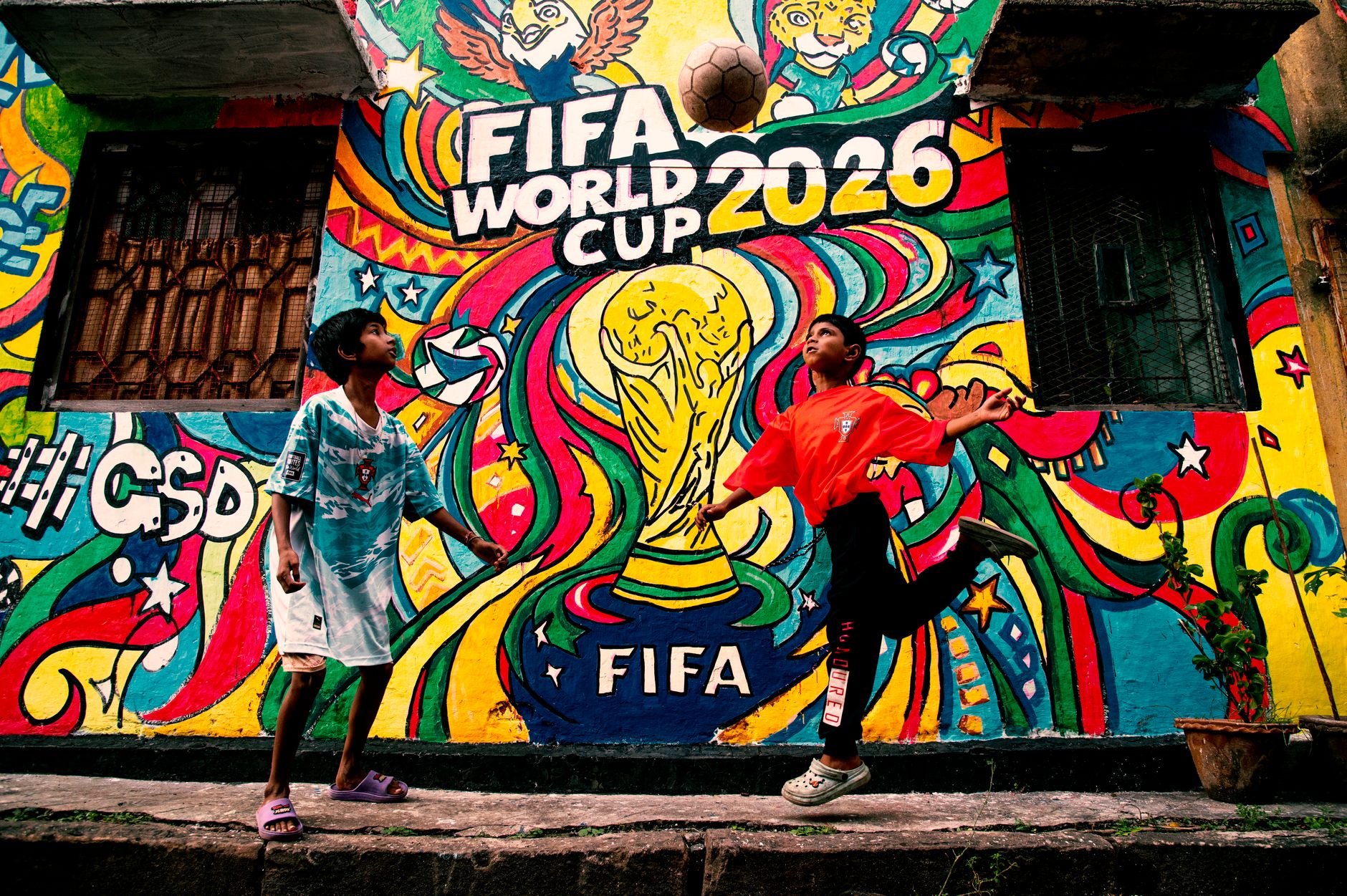
Photo by Anirban Das on Pexels
The expanded format carries trade-offs. More matches mean more rest days for top teams — the final is scheduled on July 19, giving players 39 days from opening match to trophy lift. Critics within the coaching community have noted that fixture congestion could affect squad rotation, particularly for European clubs releasing players for national duty. Proponents argue the broader qualification pathway increases representation: 6 additional slots were allocated to the AFC (Asia), 4 to CONCACAF (North/Central America), 2 to CAF (Africa), and 1 to OFC (Oceania).
How does FIFA handle the 16-city, three-country hosting model?
FIFA distributed the 104 matches across 16 host cities through a tiered allocation system. The United States hosts 78 matches across 11 cities, Canada hosts 13 matches across 2 cities, and Mexico hosts 13 matches across 3 cities. Each host city guaranteed a minimum number of group-stage matches, with knockout rounds concentrated in larger venues.
The venue list includes:
- USA (11 cities): Atlanta (Mercedes-Benz Stadium), Boston (Gillette Stadium), Dallas (AT&T Stadium), Houston (NRG Stadium), Kansas City (Arrowhead Stadium), Los Angeles (SoFi Stadium), Miami (Hard Rock Stadium), New York/New Jersey (MetLife Stadium), Philadelphia (Lincoln Financial Field), San Francisco Bay Area (Levi's Stadium), Seattle (Lumen Field)
- Canada (2 cities): Toronto (BMO Field), Vancouver (BC Place)
- Mexico (3 cities): Guadalajara (Estadio Akron), Mexico City (Estadio Azteca), Monterrey (Estadio BBVA)
The opening match at Estadio Azteca on June 11 and the final at MetLife Stadium bracket the tournament geographically. MetLife Stadium, with a 82,500 capacity, holds the largest venue designation. According to Wikipedia's 2026 FIFA World Cup entry, the final was awarded to MetLife after a bid process that considered AT&T Stadium in Arlington, Texas.
Travel logistics present the most significant operational challenge. A team or fan following the tournament from group stage through the final could theoretically traverse three countries and cover distances exceeding 5,000 miles. FIFA mitigated this by clustering group-stage matches within regional pods, reducing initial travel for most teams. The round-of-32 and round-of-16 remain spread across U.S. venues, which means transcontinental travel for surviving teams.
What about the group stage and knockout bracket structure?
The group stage runs from June 11 to June 27, 2026, spanning 16 days. Each of the 12 groups plays 6 matches (3 per matchday), producing 72 total group-stage matches over 16 days. Matchdays fall on June 11-12, 15-16, 19-20, 23-24, and 26-27. Teams earn 3 points for a win, 1 for a draw, and 0 for a loss, with the top two from each group plus the 8 best third-place teams advancing to the knockout stage.
The knockout phase follows this sequence:
- Round of 32: July 1-3 (16 matches)
- Round of 16: July 5-7 (8 matches)
- Quarterfinals: July 11-12 (4 matches)
- Semifinals: July 15-16 (2 matches)
- Third-place playoff: July 18 (1 match)
- Final: July 19 (1 match)
The "best third-place teams" rule is a procedural complexity introduced to handle the 12-group structure. Among the 12 third-place finishers, only the top 8 (ranked by points, goal differential, goals scored, and fair play points) advance. This means 8 of 12 groups will see their third-place team eliminated, while 4 groups will see all three teams below the top two eliminated. For fans analyzing qualification probabilities, this rule shifts the value of group-stage draws: a third-place draw at 1-1 yields different advancement odds depending on other group results.
Favorites will likely play 7 matches if they reach the final (3 group + 4 knockout), the same as in the 32-team format. Lower-ranked teams that exit in the round of 32 will play 4 matches. The format favors squad depth over peak performance, as teams must manage 4 knockout matches in 19 days.
[Internal Link: how to read World Cup betting odds]
Where does the expanded schedule create logistical challenges?
The schedule's main failure point is travel distance. FIFA's allocation requires cross-continental movement for knockout-stage matches, with no two consecutive rounds held in the same country. A team based in the Mexico City group-stage pod and advancing to the quarterfinals would face at minimum a 1,500-mile flight to a U.S. venue. For context, the 2022 Qatar tournament confined all matches within a 55-kilometer radius of Doha.
Specific operational risks include:
- Climate variance: Matches span temperature ranges from 85°F (Mexico City, June) to potential 95°F+ (Dallas, July)
- Time zone differences: 3-hour spread between Vancouver (PT) and Miami (ET) complicates prime-time TV scheduling
- Immigration logistics: Fans crossing U.S.-Canada or U.S.-Mexico borders require valid passports, though no special tournament visa exists
- Stadium readiness: Several venues (SoFi Stadium, Mercedes-Benz Stadium) require temporary pitch configurations for FIFA specifications
FIFA's tournament operations director summarized the challenge: "The 2026 schedule demands a logistics footprint unlike any prior World Cup, with three national jurisdictions, 16 host cities, and 104 matches coordinated in 39 days." This was noted in FIFA's 2024 technical report on tournament infrastructure.
For bettors and tactical analysts, the travel factor introduces a new variable. Historical data from the 2022 Qatar tournament showed minimal travel impact (all matches within one city). For 2026, teams with deeper squads and those based in East Coast U.S. group pods may hold a structural advantage in later rounds. Football Insights tracks travel-day performance metrics across club competitions to flag potential edges in knockout-stage matchups.
Should you start planning your 2026 World Cup calendar now?
Yes, if you intend to attend matches in person or build a betting strategy around tournament phases. Ticket sales open through FIFA.com in phases, with the first window closing in late 2025. Hospitality packages and conditional ticket offers through sponsors typically follow in early 2026. Match-specific dates are public, so a traveler planning to attend 3-4 matches in different cities can already book inter-city flights and accommodations.
The three priorities for early planning:
- Identify group-stage matches in your preferred cities — the June 11-27 window is the most accessible phase
- Map travel between host cities — factor in 1-2 day buffers between matches, especially for cross-border flights
- Track team-specific group draws — the December 2025 draw will determine which teams play in which cities, affecting ticket demand
For fans who follow the tournament remotely, a calendar-first approach helps. Group-stage matchdays cluster on weekends (Thursday-Sunday blocks), making them accessible for morning viewing in North America. Knockout matches from the round-of-16 onward are scheduled for weekday afternoons, which may affect workplace viewing arrangements. Football Insights publishes a downloadable matchday calendar each tournament week with kickoff times converted to 6 major time zones.
Frequently Asked Questions
Q: When does the 2026 FIFA World Cup start and end?
A: The tournament runs from June 11 to July 19, 2026, spanning 39 days. The opening match is scheduled at Estadio Azteca in Mexico City, and the final takes place at MetLife Stadium in East Rutherford, New Jersey.
Q: How many matches are in the 2026 World Cup?
A: There are 104 matches total: 72 group-stage matches, 16 round-of-32 matches, 8 round-of-16 matches, 4 quarterfinals, 2 semifinals, 1 third-place playoff, and 1 final. This is 40 more matches than the 2022 Qatar tournament.
Q: How many teams qualify for the 2026 World Cup?
A: 48 teams will participate, qualified through 6 confederations: UEFA (16 slots), AFC (8), CAF (9), CONCACAF (6, plus 3 host nations), CONMEBOL (6), and OFC (1). The 3 host nations (USA, Canada, Mexico) qualify automatically.
Q: What is the new round-of-32 format in 2026?
A: The round-of-32 is a new knockout stage added to accommodate the 48-team field. The top 2 teams from each of the 12 groups (24 teams) plus the 8 best third-place teams (32 total) advance to play 16 matches from July 1-3, 2026.
Q: How do I get tickets for the 2026 World Cup?
A: Tickets are sold through FIFA.com in phased sales windows. The first sales phase opened in late 2025, with subsequent phases allocated by random selection. Hospitality packages are available through FIFA's official hospitality provider at higher price points.
Q: Which stadiums host the 2026 World Cup final matches?
A: The final is at MetLife Stadium in East Rutherford, New Jersey (capacity 82,500). The semifinals are split between MetLife Stadium and AT&T Stadium in Arlington, Texas. Quarterfinals are distributed across 4 U.S. venues.
Q: How far apart are the 2026 World Cup host cities?
A: The farthest pair is Vancouver (Canada) to Miami (USA) at approximately 2,700 miles. The closest international pair is San Diego to Tijuana at 20 miles, though San Diego is not a host city. Most host cities are within 1,500 miles of their assigned regional group-stage pod.
[Internal Link: 2026 World Cup team-by-team qualification tracker]
The 2026 World Cup schedule represents a structural shift in how FIFA organizes its flagship tournament. The 48-team, 104-match, 16-city format introduces complexity that fans, bettors, and analysts must account for. Football Insights will publish match previews, tactical analysis, and data-driven predictions throughout the tournament, with daily updates once the group stage begins on June 11. For readers planning around the schedule, the priority is identifying which phase and which cities align with your fan objectives — then locking in logistics before the tournament's closer phases drive demand.
Football Insights � Editorial Archive � Volume IV