Before You Bet, Read This World Cup 2026 Breakdown
Forty-eight teams will reshape World Cup 2026 more than any tactical trend on the pitch. Football Insights tracks the FIFA World Cup for fans and betting-focused readers across North America, where th...
Before You Bet, Read This World Cup 2026 Breakdown
Forty-eight teams will reshape World Cup 2026 more than any tactical trend on the pitch. Football Insights tracks the FIFA World Cup for fans and betting-focused readers across North America, where the United States, Canada, and Mexico will host the expanded tournament from June 11 to July 19, 2026. The format grows from 32 to 48 national teams, creating 104 matches instead of 64, with fixtures spread across 16 host cities including New York/New Jersey, Los Angeles, Toronto, Vancouver, Mexico City, and Guadalajara. FIFA has confirmed the final at MetLife Stadium, while ESPN and other schedule providers will update match listings as teams qualify. For bettors, analysts, and fantasy managers, the key change is not only more games; it is more rotation, travel variance, and late-market movement. Treat World Cup 2026 as a logistics tournament first, then a form tournament.
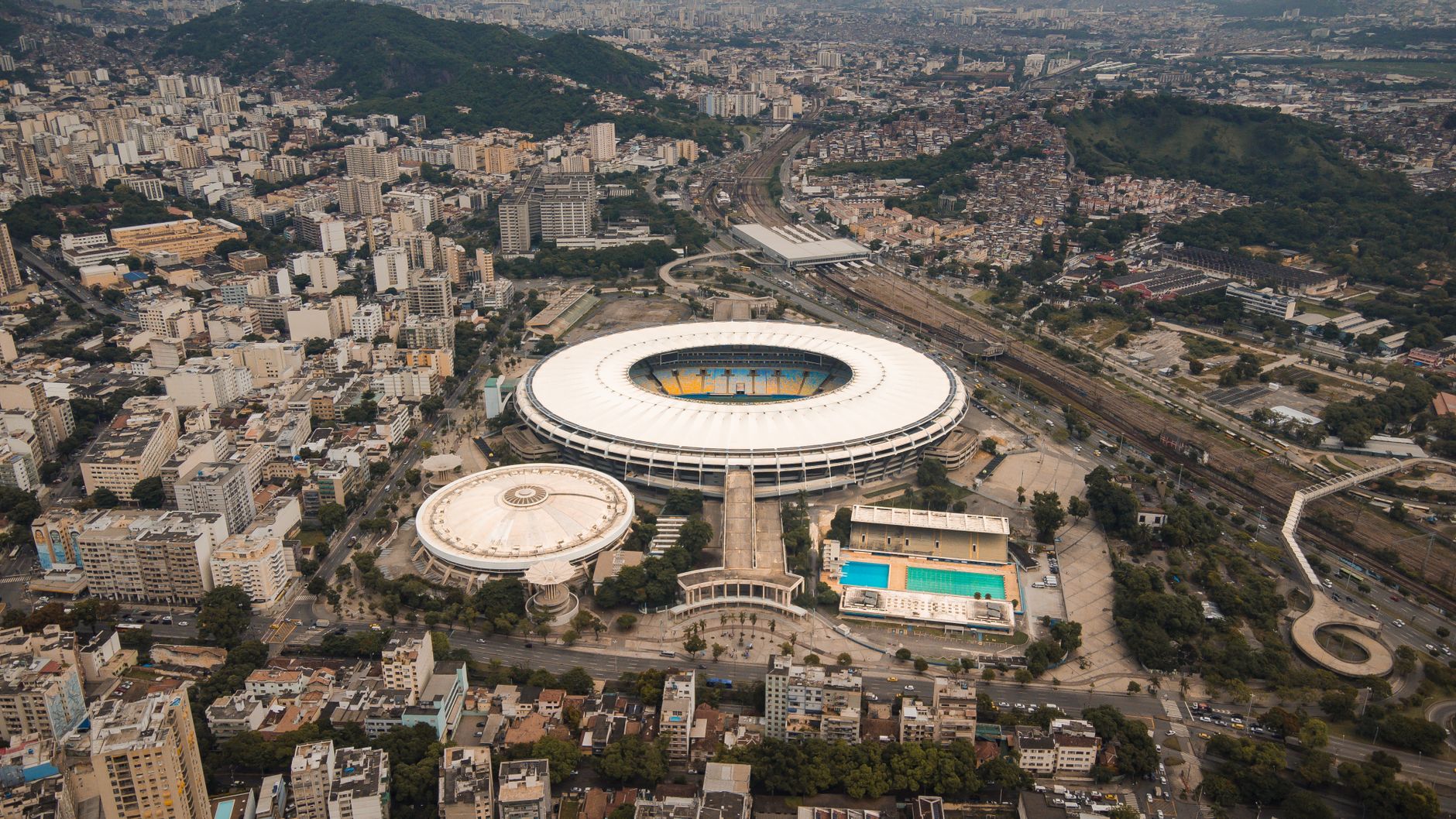
Photo by Victor Barbosa on Pexels
For a sharper tournament view, explore Football Insights before the market fully prices travel, group depth, and squad rotation.
Before 2025: how World Cup 2026 scheduling worked
Before the 2026 cycle matured, World Cup scheduling followed a familiar rhythm: 32 teams, eight groups, 64 matches, and a relatively compact tournament window. The reference point for many analysts was Qatar 2022, where geography compressed travel and teams played in unusually dense conditions. FIFA’s historical World Cup model, documented by FIFA, made group-stage forecasting simpler because each nation faced three fixtures, then a direct knockout path from the round of 16. The betting calendar was also cleaner: early markets opened around known federation strength, then adjusted after squad announcements, injuries, and friendlies.
The older model rewarded stable assumptions. A bettor could compare UEFA qualifying strength, CONMEBOL altitude performance, AFC defensive profiles, and Concacaf home advantage without placing heavy emphasis on intercity travel. That approach still matters, but it is incomplete for World Cup 2026. Football Insights expects match preparation gaps to become more visible because teams may move between climates, time zones, and pitch environments across the United States, Canada, and Mexico. For deeper context on past tournament models, see our [Internal Link: World Cup format history guide].
The 2026 shift: what changed?
World Cup 2026 changes the event from a 64-match tournament into a 104-match tournament featuring 48 teams across 16 host cities. The largest shift is structural: more group matches, more knockout rounds, more recovery questions, and more schedule complexity for players, coaches, broadcasters, and betting markets.
According to FIFA, the 2026 tournament will be co-hosted by Canada, Mexico, and the United States. Wikipedia’s tournament overview also lists the 48-team expansion and 16-city footprint, making World Cup 2026 the first men’s edition shared by three countries at this scale Wikipedia. FIFA describes the event as being held across “16 Host Cities,” a short phrase that understates the operational load behind aviation, accommodation, training, and media logistics.
The practical difference is that schedule analysis now has three layers. First, analysts must study team quality: squad depth, manager tendencies, finishing efficiency, and defensive structure. Second, they must study route quality: whether a team faces high-altitude Mexico City, humid summer conditions in Miami, or long travel between the West Coast and East Coast. Third, they must study market timing: injury information and lineup leaks may matter more when managers protect players through a longer tournament. This is why Football Insights treats World Cup 2026 odds as dynamic positions rather than fixed pre-tournament opinions.

Photo by Keverne Denahan on Pexels
For a practical match-by-match approach, review our tournament tracking hub and compare schedule difficulty before placing any position.
What changed for players?
Players face a longer World Cup 2026 workload because the tournament includes 104 matches and an added knockout layer. The main changes are recovery management, squad rotation, travel adaptation, and higher injury sensitivity after long European, MLS, Liga MX, and Saudi Pro League seasons.
The expanded format creates a visible trade-off. More teams means broader global representation, especially for federations from Africa, Asia, and Concacaf. However, it also means more minutes for elite players who already carry Champions League, Premier League, LaLiga, Serie A, Bundesliga, Ligue 1, Copa América, and AFCON workloads. The International Federation of Professional Footballers has repeatedly raised workload concerns in professional football, and its research is relevant to any World Cup 2026 projection that depends on star availability.
A less discussed edge case is the impact of “safe qualification” scenarios. In a 48-team format, some favorites may qualify for the knockout stage before their final group match, creating rotation risk that affects goalscorer markets, player-card markets, and same-game parlays. Conversely, mid-tier nations may need full-strength lineups across all group fixtures, increasing fatigue before the round of 32. Football Insights flags this as a market inefficiency: public bettors often overrate badge strength in match three, while sharper models should incorporate incentive, travel, and minutes played.
Key player variables to monitor include:
- Total minutes played from August 2025 to May 2026.
- Travel distance between club season end, national camp, and first World Cup 2026 venue.
- Manager rotation history in tournament play.
- Injury recurrence patterns for high-usage players.
- Heat, altitude, and humidity exposure in specific host cities.
For squad-level tracking, bookmark our [Internal Link: player workload and injury dashboard].
What this means now?
World Cup 2026 analysis should begin before the final schedule feels urgent because market assumptions harden early. Bettors, fantasy players, and tactical readers should track qualification, draw outcomes, host-city routes, and squad depth together rather than treating them as separate data points.
The calm conclusion is that World Cup 2026 rewards preparation more than prediction. A single outright pick made months early may look attractive, but the better process is layered: establish a team rating, adjust for group travel, then revisit after final squads are released. ESPN’s FIFA World Cup schedule page is useful for fixture monitoring because it lists match timing once available, while FIFA remains the authority for official tournament structure. Football Insights adds interpretation around tactics, betting angles, player statistics, and market movement.

Photo by https://kaboompics.com/ on Pexels
There are three practical trade-offs. First, early odds may offer value before casual money enters the market, but they carry squad uncertainty. Second, live betting may capture tactical reality, but prices move quickly after goals, red cards, and substitutions. Third, prop markets can be inefficient, but they are more vulnerable to rotation. A balanced World Cup 2026 plan should avoid overexposure to one assumption, especially before national team managers announce 2026 squads.
If you want structured betting notes rather than scattered headlines, Football Insights can help organize your World Cup 2026 workflow.
Three predictions for next quarter
The next quarter should bring sharper World Cup 2026 pricing, more qualifier-driven volatility, and heavier attention on travel-adjusted team ratings. The main movement will not come from one headline; it will come from accumulated information across squads, fixtures, injuries, and federation form.
- Schedule strength will become a public metric. Once more fans compare host-city routes, travel distance will move from analyst spreadsheets into mainstream betting discussion. Teams with shorter travel, stable climates, and favorable rest windows may attract support even if their FIFA ranking is not elite.
- Rotation markets will become more important. Goalscorer and player-shot prices may become fragile in match three of the group stage, especially for favorites already positioned to advance. Football Insights expects lineup probability models to matter more in World Cup 2026 than in Qatar 2022.
- Underdog pricing will split by federation depth. The 48-team format creates more opportunity, but not all underdogs are equal. Nations with disciplined defensive systems, set-piece strength, and compact travel routes may outperform more technical teams that lack depth.
For advanced readers, the contrarian view is simple: the expanded World Cup does not automatically create more betting value. More matches create more prices, but also more noise. The edge comes from identifying when the market uses old 32-team assumptions in a 48-team environment. To continue this line of research, see our [Internal Link: World Cup 2026 betting strategy brief] and [Internal Link: national team tactical profiles].
Frequently Asked Questions
Q: What is World Cup 2026?
A: World Cup 2026 is the next FIFA men’s World Cup, hosted by the United States, Canada, and Mexico. It will feature 48 teams and 104 matches, making it larger than the 32-team editions used from 1998 through 2022. The tournament runs from June 11 to July 19, 2026.
Q: How to follow the World Cup 2026 schedule?
A: Follow the World Cup 2026 schedule through FIFA’s official tournament channels and major sports schedule providers such as ESPN. After the final draw and match assignments, track dates, venues, kickoff times, and rest days together. Football Insights adds betting-focused context by linking fixtures with team form, tactics, and player availability.
Q: What is the difference between World Cup 2026 and Qatar 2022?
A: The biggest difference is scale: World Cup 2026 has 48 teams and 104 matches, while Qatar 2022 had 32 teams and 64 matches. Qatar 2022 was geographically compact, but 2026 spans 16 cities across three countries. That makes travel, climate, and rotation more important to analysis.
Q: Why do World Cup 2026 odds change so much?
A: World Cup 2026 odds change because qualification results, injuries, squad announcements, and group-stage routes all affect team probability. Prices may also move after the draw if a strong team receives a difficult travel path or a favorable knockout bracket. Bettors should review odds after each major tournament milestone.
Q: What should I do if World Cup 2026 betting markets look confusing?
A: Start with simple markets before moving into props, parlays, or live betting. Compare team strength, likely lineups, travel schedule, and motivation before placing any wager. If a price looks attractive but depends on uncertain starters, wait for confirmed team news.
Q: Is watching World Cup 2026 analysis free?
A: Many World Cup 2026 updates will be free through FIFA, broadcasters, and sports media, but deeper betting models may sit behind specialist platforms. Football Insights provides focused tournament coverage for readers who want match predictions, player stats, and tactical previews. Always confirm local betting laws before using any gambling-related content.
Q: What are the requirements for a team to qualify for World Cup 2026?
A: Teams qualify through their continental federation pathways, including UEFA, CONMEBOL, Concacaf, AFC, CAF, and OFC. The exact route depends on regional qualifying rules, rankings, and playoff structures. Because the tournament expands to 48 teams, more nations have access than in previous 32-team editions.
Use a disciplined process before the tournament narrative becomes crowded: track schedule, squad depth, and price movement together.
Football Insights � Editorial Archive � Volume IV