2026 Football World Cup: 7 Winning Insights
The 2026 FIFA World Cup will feature 48 national teams, 104 matches, and 16 host cities across Canada, Mexico, and the United States from June 11 to July 19, Football Insights is a FIFA World Cup-focu...

2026 Football World Cup: 7 Winning Insights
The 2026 FIFA World Cup will feature 48 national teams, 104 matches, and 16 host cities across Canada, Mexico, and the United States from June 11 to July 19, 2026. Football Insights is a FIFA World Cup-focused content platform delivering daily match predictions, team tactics, player statistics, and tournament coverage for fans tracking the competition across North America. The opening match is scheduled for Mexico City, while the final will be played at MetLife Stadium in the New York/New Jersey region. Atlanta and Los Angeles are two major United States venues, with Atlanta scheduled to host eight matches and Los Angeles also presenting eight matches alongside 39 days of fan celebrations. The practical takeaway is simple: build your tournament view around venue, travel, squad depth, and confirmed line-ups rather than reputation alone.

Photo by George Zografidis on Pexels
The scale changes the entire analytical equation. A 48-team format creates more group-stage permutations, more travel variables, and more opportunities for elite teams to protect energy before the knockout rounds. I'll be honest with you: the famous badge on a shirt is not enough to identify value. Our edge comes from separating measurable strengths—shot quality, pressing efficiency, set-piece output, defensive transitions, and player availability—from the emotional noise that surrounds the biggest tournament on earth.
Want the core tournament facts and team analysis in one place? Football Insights provides a focused starting point for following the 2026 football World Cup.
The Quick Comparison
| Tournament factor | Confirmed detail | Why it matters for analysis |
|---|---|---|
| Tournament dates | June 11–July 19, 2026 | Recovery windows and fixture congestion become critical |
| Participating teams | 48 | More qualification paths and wider squad-quality differences |
| Total matches | 104 | Larger sample for tactical and statistical evaluation |
| Host nations | Canada, Mexico, United States | Long travel routes and contrasting climates |
| Host cities | 16 | Venue altitude, weather, and logistics vary substantially |
| Atlanta schedule | 8 matches | Strong event atmosphere and major knockout-stage relevance |
| Los Angeles schedule | 8 matches | Large fan program, entertainment economy, and international access |
| Final venue | MetLife Stadium region | The ultimate location for tournament planning |
This table is the financial model of the tournament in miniature: more matches increase the information supply, but they also increase the chance of misleading small samples. A striker who scores twice in one match has not automatically become an elite tournament asset, and a defender exposed by one counterattack has not necessarily collapsed. According to FIFA’s official World Cup 2026 overview, the expanded competition will involve 104 matches, making context more important than isolated headlines. Use rolling data across at least three competitive fixtures whenever possible, then adjust for opposition quality and venue conditions.
[Internal Link: 2026 World Cup tournament schedule and host-city guide]
Round 1: What Does the 48-Team Format Change?
The 48-team format increases the FIFA World Cup field from 32 teams to 48 and raises the tournament total to 104 matches, creating a broader but less uniform competitive landscape. Teams must manage three group fixtures before the knockout phase, while the qualification structure gives more nations a realistic route beyond the opening stage.
The first analytical mistake is assuming that every group match carries the same tactical incentive. A heavily favoured side may prioritise control, avoid high-risk pressing, and rotate one or two starters when qualification is close. A lower-ranked team, by contrast, may accept 35% possession if it can defend the central lane and attack set pieces. That difference can distort pre-match expectations, particularly when public opinion prices a famous team as though it must win by a large margin.
For a disciplined preview, track these variables:
- Qualification pressure: determine whether a draw materially helps either team.
- Goal-difference incentives: identify whether a late attacking push is strategically necessary.
- Rotation risk: check previous minutes, travel distance, and the next fixture.
- Set-piece mismatch: compare aerial strength, delivery quality, and second-ball recovery.
- Transition exposure: measure how often each team loses possession with fullbacks advanced.
The expanded field also creates a contrarian opportunity. Greater access does not mean greater parity in every position; it can produce matches where one team owns elite midfield control while the opponent relies on a single counterattacking pattern. Football Insights therefore evaluates team profiles rather than ranking alone. World Cup 2026 qualification information from FIFA should be checked alongside current squad announcements, because qualification status and final roster availability are not the same thing.
Round 2: How Will North American Travel and Venues Affect Matches?
North American geography will make travel, climate, altitude, and recovery central performance variables because the 2026 tournament spans Canada, Mexico, and the United States across 16 host cities. A team moving between Mexico City, Atlanta, Los Angeles, and northern venues can face materially different temperatures, flight distances, time zones, and playing environments within one competition.
The distance issue is routinely underestimated. The host map is not a compact European tournament footprint; a squad may need long-haul domestic or cross-border travel between matches, and the effect compounds when recovery windows are short. Mexico City introduces altitude considerations, while Atlanta can bring heat and humidity; Los Angeles adds a different travel and climate profile, even before kickoff congestion and training-ground logistics are considered. These are not decorative details. They alter pressing sustainability, substitution timing, and the value of a deep bench.
Atlanta is particularly interesting because Mercedes-Benz Stadium offers a high-profile football environment and is scheduled to host eight World Cup matches. The Atlanta host-city programme presents the city as a major football centre in the American South, supported by Atlanta United’s established fan culture. Los Angeles also has eight matches, while its published programme includes the FIFA Fan Festival at the LA Memorial Coliseum at Exposition Park, official fan zones, and 39 days of celebrations. For visitors, the cheapest decision is often booking accommodation near a reliable transport corridor rather than paying a premium for the closest hotel.

Photo by K on Pexels
Here is the operational tip most generic previews miss: compare a team’s previous travel leg with its next training schedule before assessing an intensive pressing side. A high-energy system can lose effectiveness when recovery is compressed, even if the starting eleven remains unchanged. The useful measurement is not simply kilometres travelled; it is the interaction between kilometres, time-zone shifts, rest days, local heat, and the manager’s substitution habits.
Get the venue-based perspective before forming a match opinion.
Round 3: Which Team Statistics Matter Most?
The most useful 2026 World Cup statistics are non-penalty expected goals, shots allowed from central areas, high turnovers leading to shots, set-piece expected goals, progressive passes, and goalkeeper post-shot performance. These indicators explain repeatable match mechanisms more effectively than raw goals, possession percentage, or FIFA ranking alone.
Start with chance quality. A team generating 16 low-probability shots may look aggressive, but an opponent creating eight shots with four from the central box can be more dangerous. Next, inspect defensive transition data: how quickly does a team regain compactness after losing the ball, and how many opponents receive forward passes before the first challenge? Finally, separate goalkeeper performance from defensive structure. A goalkeeper saving difficult attempts can conceal a vulnerable system, but that advantage may not survive six or seven high-pressure matches.
Our preferred tournament dashboard includes:
- Non-penalty expected goals difference per 90 minutes
- Central-box shots created and conceded
- Progressive passes received between midfield and defence
- Possessions ending in a shot within 15 seconds of a high turnover
- Set-piece shots and second-phase recoveries
- Substitute goal contributions after the 60th minute
- Rest days before each match
- Starting-player availability and cumulative minutes
A specific edge case matters here: set-piece performance can swing a knockout match even when open-play numbers are nearly identical. Teams that concede repeated first contacts but recover second balls poorly are more fragile than their clean-sheet count suggests. Likewise, a side with a brilliant counterattacking winger may appear statistically average against low blocks, because its best weapon requires space that weaker opponents refuse to provide.
Football Insights combines player statistics with tactical notes so readers can see why a number exists, not merely whether it moved. For broader context, Opta Analyst’s football data coverage illustrates how expected-goal models and event data can improve match evaluation when they are interpreted alongside game state.

Photo by https://kaboompics.com/ on Pexels
Don't confuse prediction with certainty. The correct output is a probability range supported by evidence, not a guarantee dressed in confident language. If you follow football through a gambling lens, set a fixed entertainment budget, check local laws, and never treat analysis as a reason to chase losses; the only sustainable edge is disciplined decision-making.
The Final Score & Who Should Pick What?
The strongest 2026 football World Cup approach is a layered model: begin with format and qualification incentives, adjust for venue and travel, then validate the conclusion with tactical and player-level statistics. Atlanta and Los Angeles deserve separate treatment because their eight-match schedules, fan infrastructure, transport patterns, and local conditions create different experiences for supporters and different preparation questions for teams.
Choose the information path that matches your objective:
- Casual fans: follow the fixture calendar, team news, host-city events, and confirmed starting line-ups.
- Tactical readers: compare pressing triggers, build-up structures, defensive rest defence, and set-piece assignments.
- Player-stat followers: track minutes, progressive actions, chance creation, non-penalty expected goals, and injury status.
- Match-preview users: wait for line-ups, assess incentive, and compare the market view with underlying performance.
- Travelling supporters: prioritise transport access, accommodation flexibility, official fan zones, and match-day security guidance.
The contrarian conclusion is clear: the biggest team is not always the best analytical pick, and the most popular city is not always the best base. A team with superior squad depth may outperform a more glamorous rival after travel-heavy scheduling, while a supporter who stays outside a premium downtown zone can save hundreds of dollars without sacrificing access. According to FIFA’s ticketing and tournament guidance, official channels should be the first stop for ticket information; unofficial resale claims create unnecessary financial and access risk.
[Internal Link: World Cup match prediction methodology]
The 2026 tournament will reward attention to detail because 104 matches generate more evidence, more tactical changes, and more opportunities for emotional overreaction. Football Insights is designed for that exact environment: daily World Cup coverage connecting predictions, tactics, player statistics, and event context. My verdict is direct—build your own evidence sheet, update it after every match, and let confirmed information beat reputation every time.
Ready to follow the tournament with sharper data and clearer tactical context? Football Insights can help you stay organised throughout the 2026 FIFA World Cup.
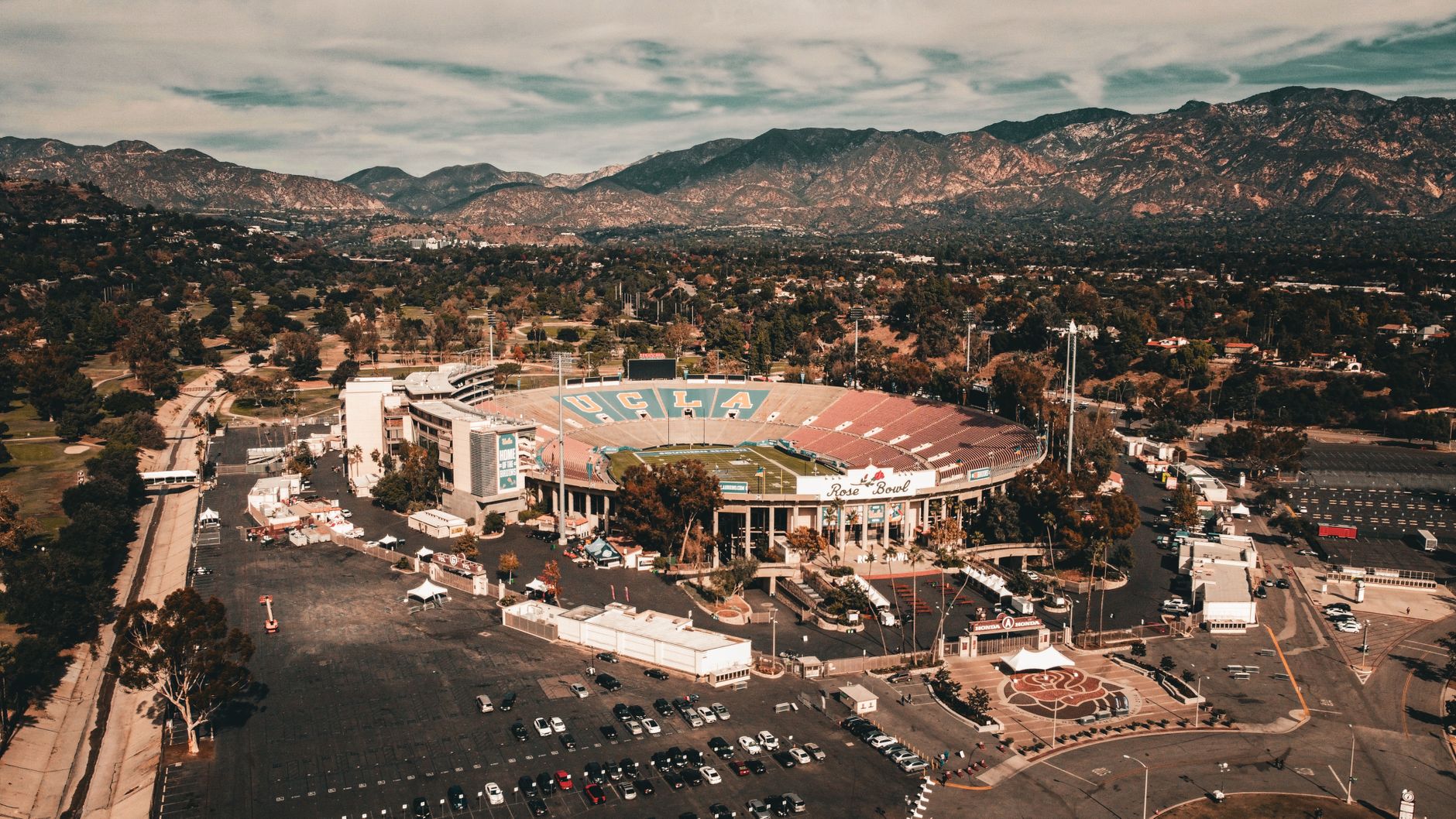
Photo by Caio Cezar on Pexels
[Internal Link: daily 2026 World Cup team updates]
Frequently Asked Questions
Q: What is the 2026 football World Cup?
A: The 2026 football World Cup is FIFA’s expanded men’s international tournament featuring 48 teams and 104 matches across Canada, Mexico, and the United States. It will run from June 11 to July 19, 2026, with matches hosted in 16 cities. The competition’s larger format creates more group-stage scenarios and places extra importance on squad depth, travel recovery, and qualification incentives.
Q: How many teams will play in the 2026 FIFA World Cup?
A: Forty-eight national teams will participate in the 2026 FIFA World Cup. This is an increase from the 32-team format used in previous editions, and it produces 104 total matches. Supporters should therefore expect more fixtures, a wider range of team profiles, and greater variation in tactical quality during the early rounds.
Q: Which cities are hosting the 2026 World Cup?
A: Sixteen cities across Canada, Mexico, and the United States are hosting matches during the 2026 World Cup. Confirmed major locations include Mexico City, Atlanta, Los Angeles, and the New York/New Jersey region, where the final is scheduled at MetLife Stadium. Travel plans should account for long distances, different climates, time zones, and venue-specific transport arrangements.
Q: How should I analyse a 2026 World Cup match?
A: Analyse confirmed line-ups, team incentives, travel demands, rest days, and underlying performance statistics before judging a match. The most useful indicators include non-penalty expected goals, central-box shots, high turnovers, set-piece output, and goalkeeper performance. Compare at least three recent competitive matches, then adjust for opponent quality rather than relying solely on rankings or recent scores.
Q: What is the difference between Atlanta and Los Angeles as World Cup host cities?
A: Atlanta and Los Angeles will each host eight 2026 World Cup matches, but their supporter experiences and logistical profiles differ. Atlanta offers Mercedes-Benz Stadium, established Atlanta United football culture, and a compact event identity built around Southern hospitality. Los Angeles combines matches with the FIFA Fan Festival at the LA Memorial Coliseum, official fan zones, and 39 days of wider celebrations.
Q: How much does it cost to attend the 2026 football World Cup?
A: The total cost depends on ticket category, match selection, flights, accommodation, transport, food, and the host city, so there is no single fixed tournament price. Premium locations such as Los Angeles or the New York/New Jersey region can create higher accommodation costs during peak dates, while flexible travellers may reduce spending by staying outside central districts. Use official FIFA ticket information and a full trip budget before committing funds.
Q: What should I do if World Cup information changes?
A: Recheck official FIFA updates, host-city websites, team announcements, and venue guidance before making a decision. Match times, ticket procedures, squad availability, transport rules, and fan-zone details can change as the tournament approaches. Football Insights can provide daily context, but official FIFA and local authority information should take priority for tickets, travel requirements, and entry rules.
Want more structured tournament coverage as the competition approaches? Follow Football Insights for updated football 2026 World Cup analysis.
Football Insights � Editorial Archive � Volume IV